You’re sitting down to dinner at your favorite spot in Town Center when a single bite of something crunchy sends a sharp, electric jolt through your jaw. You stop chewing, wait for the throb to subside, and tentatively try again—only for the pain to return. That nagging sensation isn’t just a minor annoyance; it is often a distress signal from a tooth that has reached its breaking point. Ignoring these signals doesn’t just prolong the discomfort; it risks the structural integrity of your entire smile. If you are searching for a dental crown Weston residents trust, understanding when to move from “watching a tooth” to “fixing a tooth” is the key to avoiding an extraction.
At Weston Family Dental Center, we see patients every day who hoped a small crack or a loose filling would simply resolve itself. Unfortunately, teeth cannot heal themselves. When the protective enamel is compromised, the clock starts ticking. A dental crown acts as a custom-engineered “cap” that covers the entire visible portion of the tooth, restoring its shape, size, and strength.
1. Persistent Tooth Pain While Eating
One of the most common indicators that you require broken tooth repair is sharp pain that occurs specifically when you apply pressure. If you find yourself winnowing down your diet to soft foods or avoiding certain textures entirely, your tooth is likely flexing under the pressure of your bite.
This “rebound pain”—pain that happens when you release a bite—is a classic symptom of a structural fracture. When a tooth is weakened by decay or a previous large filling, it can no longer distribute the forces of chewing evenly. Without a crown to hold the tooth together and absorb that pressure, the internal pulp becomes irritated. Left untreated, this constant irritation can lead to irreversible nerve damage, turning a simple restorative procedure into a complex emergency.
2. Visible Cracks or Chips in Your Tooth
Not every crack is a dental emergency, but if you can see a fracture line or a missing piece of enamel in the mirror, your tooth is vulnerable. Whether it resulted from a sports injury in Regional Park, years of nighttime grinding (bruxism), or simply biting down on a hard piece of ice, a visible crack is a gateway for bacteria.
Professional cracked tooth treatment is about more than just aesthetics. While a small chip might be fixed with bonding, a deep crack requires a crown to prevent the fracture from spreading toward the root. Once a crack reaches the gum line, the tooth often becomes unsalvageable. Using a crown early “splints” the tooth together, keeping the fracture contained and protecting the sensitive internal layers from oral bacteria.
3. Extreme Sensitivity to Hot or Cold Foods
We’ve all had that moment where a cold drink or a hot coffee causes a brief zing. However, if that sensitivity lingers for minutes after the stimulus is gone, you are likely dealing with weakened tooth enamel or exposed dentin.
When the protective outer layer of your tooth wears thin or breaks away, the microscopic tubules leading to the nerve are exposed. This creates a direct pathway for temperature changes to shock the pulp. A dental restoration like a crown provides a thick, insulating barrier that replaces lost enamel. This not only eliminates the “zing” but also ensures that everyday activities like drinking a glass of water don’t become a painful chore.
4. An Old Filling Is Cracking or Falling Out
Fillings are excellent for treating small to mid-sized cavities, but they don’t last forever. Over time, the constant pressure of chewing causes silver (amalgam) or composite fillings to expand and contract. Eventually, the seal between the filling and the tooth breaks, or the surrounding weakened tooth structure begins to crumble.
When a large filling fails, there is often very little natural tooth structure left to support a new one. In these cases, placing another filling is like building a house on a cracked foundation. A crown is the superior choice for cavity damage that has compromised more than half the width of the tooth. It encompasses the remaining natural tooth, providing 360-degree support that a filling simply cannot offer.
5. Tooth Discoloration After Trauma or Decay
Have you noticed one specific tooth looking darker, grayer, or more yellow than its neighbors? This is often a sign of internal tooth damage. Discoloration usually indicates that the blood supply to the tooth is restricted or that deep decay is rotting the tooth from the inside out.
While professional whitening can fix surface stains, it cannot touch internal “non-vital” discoloration. A dental crown serves a dual purpose here: it reinforces a tooth that is becoming brittle from the inside and provides a complete aesthetic overhaul. Our team crafts crowns that match the exact translucency and shade of your natural teeth, masking the darkened tooth signs while restoring its health.
6. Your Dentist Recommended a Crown After Root Canal
A root canal is a life-saving procedure for a tooth, but it does leave the tooth “hollowed out” and more prone to fracturing. Because the blood supply is removed during the procedure, the tooth becomes brittle over time.
In the dental industry, placing dental caps Weston after a root canal on a molar or premolar is considered the gold standard of care. Without the protection of a crown, a root-canaled tooth is at a significantly higher risk of splitting down the middle under the force of your bite. The crown provides the long-term strength needed to ensure your investment in the root canal lasts for decades.
7. You Avoid Chewing on One Side
Subconsciously shifting all your food to the left or right side of your mouth is a major red flag. This behavior is usually a compensatory mechanism for a cracked molar or tooth instability that you haven’t fully acknowledged yet.
When you favor one side, you aren’t just ignoring a potential problem; you are overworking the other side of your jaw. This can lead to bite imbalances, TMJ (jaw joint) issues, and accelerated wear on your “good” teeth. Restoring the damaged tooth with a crown restores your bite’s equilibrium, allowing you to eat comfortably and protect your overall oral health.
What Happens If You Ignore These Warning Signs?
Many patients hesitate to get a crown because they hope the tooth will “settle down.” Unfortunately, dental problems are unique in that they are almost always cheaper and easier to fix the earlier they are caught.
Ignoring the need for a crown leads to:
- Infection Risk: Bacteria entering a crack can cause a painful abscess.
- Tooth Extraction: If a crack spreads to the root, the tooth must be pulled.
- Higher Costs: A crown is a preventative investment. An extraction followed by a dental implant or bridge is significantly more expensive and invasive.
- Worsening Fractures: Small chips eventually turn into major breaks that occur at the most inconvenient times (like during a holiday or vacation).
How a Dental Crown Protects Your Tooth
A modern dental crown is a marvel of restorative dentistry. Crafted from high-quality porcelain, zirconia, or gold, it provides a durable shield that mimics the function of natural enamel.
The benefits include:
- Durability: Crowns can withstand the intense pressure of your bite for 10 to 15 years or longer with proper care.
- Protection: It seals the tooth from further decay.
- Aesthetics: We customize the shape to ensure it fits perfectly within your smile line.
- Comfort: Once placed, a crown feels just like a natural tooth.
Dental Crown Treatment in Weston, Florida
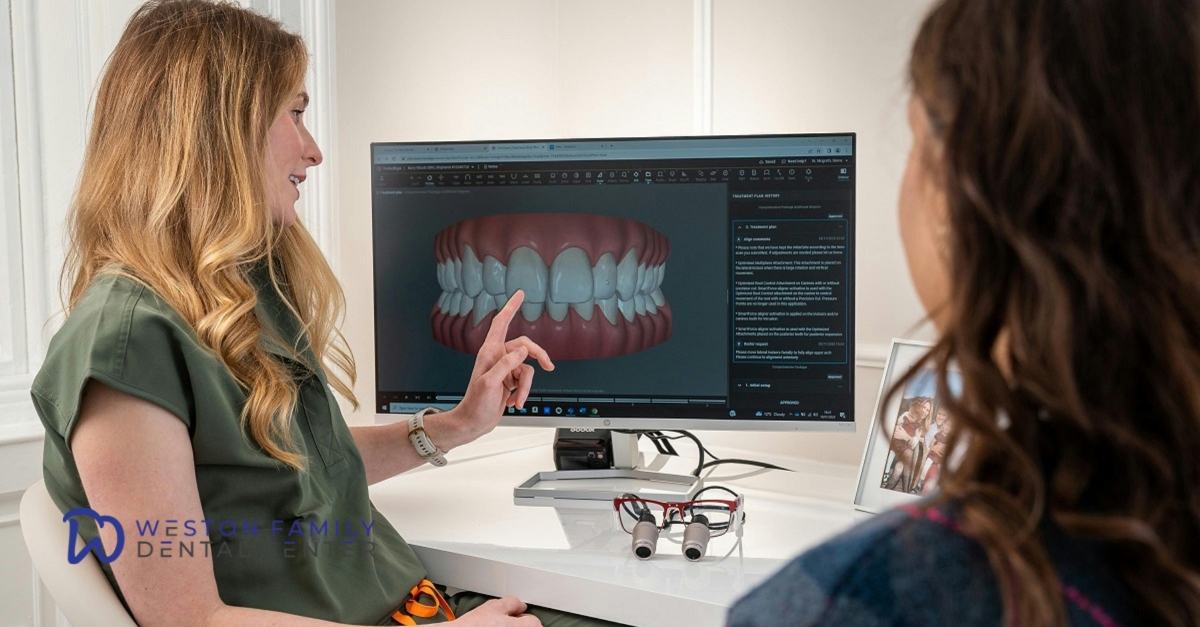
If you recognize any of these warning signs, you need a team that combines clinical expertise with a gentle touch. At Weston Family Dental Center, we are proud to serve our neighbors in Weston, as well as the surrounding communities of Sunrise, Davie, Pembroke Pines, and Southwest Ranches. Our practice utilizes modern dental technology to ensure your tooth damage repair is precise, comfortable, and aesthetically pleasing. We understand that dental anxiety is real, which is why we offer a transparent, educational approach. We don’t just tell you that you need a crown; we show you why using intraoral cameras and digital X-rays so you can make an informed decision about your health.
FAQs: 7 Warning Signs You Need a Dental Crown Fast
How do I know if I need a dental crown?
Common indicators include sharp pain when chewing, extreme temperature sensitivity, a large failing filling, or a tooth that has undergone a root canal. If your dentist notes that more than 50% of your tooth is compromised, a crown is usually the recommended fix.
Can a cracked tooth be saved with a crown?
In many cases, yes. As long as the crack has not extended below the gum line or into the root structure, a crown can “wrap” the tooth and prevent the crack from spreading further.
Are dental crowns painful?
The process of getting a crown is similar to getting a filling. We use local anesthesia to ensure you are completely numb. Most patients report immediate relief from their previous tooth pain once the permanent crown is placed.
How long do dental crowns last?
On average, a well-maintained crown lasts between 10 and 15 years. However, with excellent oral hygiene and regular checkups at Weston Family Dental, many crowns last 20+ years.
What is the difference between a filling and a crown?
A filling is placed inside a hole in the tooth. A crown is placed over the tooth. Fillings rely on the remaining tooth walls for support, while a crown provides its own support by covering the entire tooth.
Schedule Your Appointment Today
Your smile is one of your most valuable assets. Whether you are dealing with a damaged tooth or simply want to ensure your old dental work is still holding up, our team is here to help. We offer same-week consultations to get you out of pain and back to enjoying your life in beautiful South Florida.
Ready to restore your smile? Book your appointment online or call Weston Family Dental Center today!