
Introduction:
Seeing pink in the sink can be alarming, but you aren’t alone. Bleeding gums are one of the most common dental concerns, yet they are often ignored until they cause pain or tooth loss. Whether it happens during your morning brush or while flossing, bleeding is your body’s way of signaling that your gum tissue is under attack by bacteria or physical irritation.
At Weston Family Dental Florida, we believe that education is the first step toward a healthy smile. Understanding why your gums bleed—and acting fast—is the difference between a simple cleaning and a complex surgical procedure. Our Weston-based team is dedicated to helping patients identify these early warning signs to restore oral health before gum disease escalates.
Common Causes of Bleeding Gums
Understanding why your gums are bleeding is the first step toward stopping the damage. While it might seem like a minor annoyance, bleeding is typically a symptom of an underlying issue that needs attention.
- Plaque and Tartar Buildup: This is the primary culprit. Plaque is a sticky film of bacteria that constantly forms on your teeth. If it isn’t thoroughly brushed and flossed away, it hardens into tartar (calculus). Tartar acts like a constant irritant to your gumline, causing an inflammatory response known as gingivitis.
- Aggressive Oral Hygiene: More pressure doesn’t mean cleaner teeth. Using a hard-bristled toothbrush or “scrubbing” your teeth too vigorously can actually tear the delicate gum tissue. Similarly, “snapping” floss into the gums rather than gently sliding can cause immediate bleeding and recession.
- Vitamin Deficiencies: Your gums rely on specific nutrients to stay strong. A lack of Vitamin C weakens the connective tissues and blood vessels in your mouth, while a Vitamin K deficiency can prevent your blood from clotting properly, making even minor irritations bleed excessively.
Gingivitis: The Starting Point
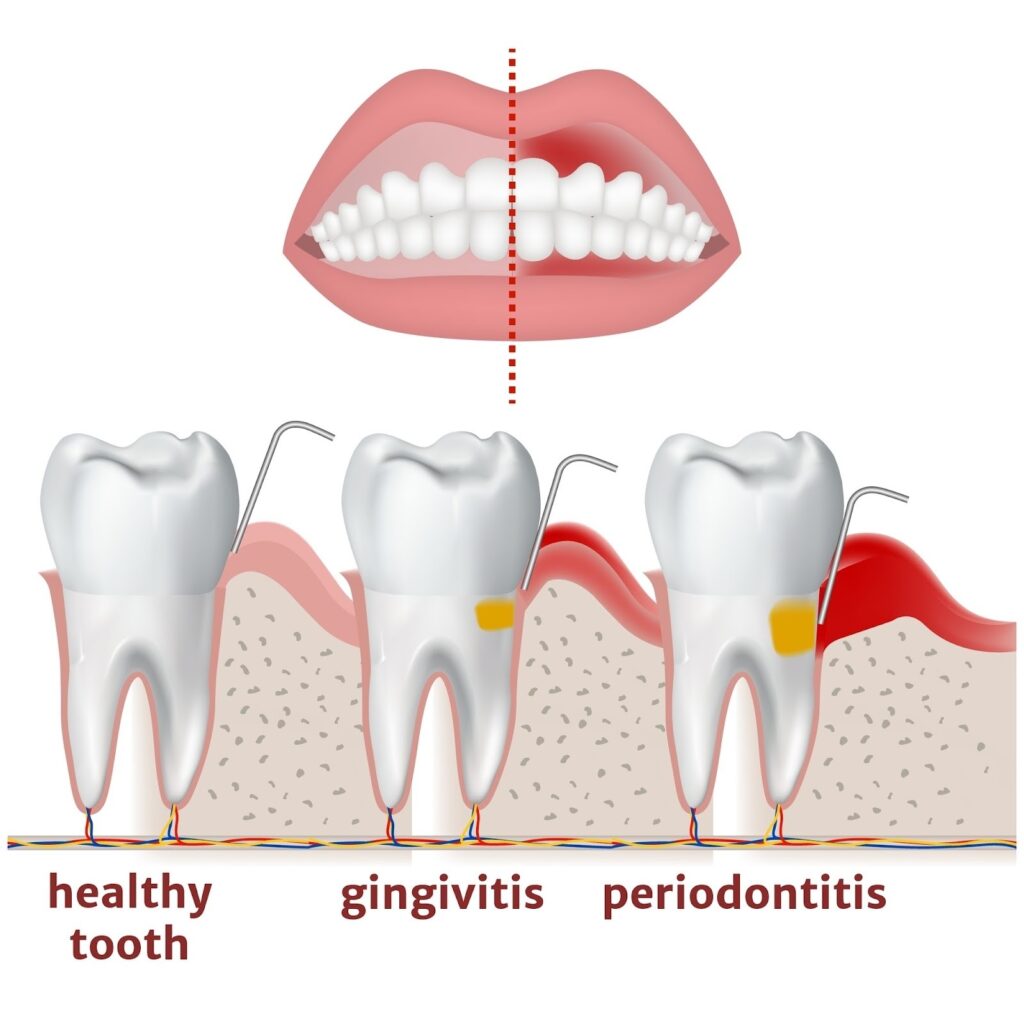
Gingivitis marks the first stage of gum disease, and it is the most critical time to act because it is 100% reversible. At this stage, the bacteria in plaque have caused the gums to become red, swollen, and prone to bleeding, but the bone and connective tissue holding your teeth in place are not yet affected.
Why Gingivitis Develops
- Poor Oral Hygiene: This is the most common trigger. Skipping even a single day of flossing or rushing through your two-minute brush allows bacteria to multiply unchecked along the gumline.
- Hormonal Shifts: Life stages like pregnancy, puberty, or menopause cause hormone surges that increase blood flow to the gums. This makes the tissue extra sensitive, causing it to bleed even with minor pressure.
- Chronic Dry Mouth: Saliva is your mouth’s natural cleanser. If you suffer from dry mouth (xerostomia) due to mouth breathing or certain medications, plaque stays on your teeth longer, leading to rapid inflammation.
Spotting the Signs Early
If you notice your gums look dusky red or purple instead of a healthy coral pink, or if they feel “puffy” to the touch, you are likely dealing with gingivitis. The good news? A professional cleaning at Weston Family Dental Florida combined with improved home care can usually reset your oral health completely.
When Bleeding Signals Advanced Gum Disease
If you ignore the early signs of gingivitis, the inflammation can advance into a much more serious condition called Periodontitis. At this stage, the infection is no longer just on the surface; it begins to attack the structures that hold your teeth in place.
The Progression of Periodontitis
- Gums Pull Away: As the infection deepens, your gums begin to “recede” or pull away from your teeth. This creates deep periodontal pockets where bacteria, food particles, and plaque become trapped and impossible to reach with a regular toothbrush.
- Persistent Bad Breath: Unlike morning breath that fades after a rinse, the bacteria deep in these pockets produce foul-smelling gases that cause a constant unpleasant taste or odor.
- Loose Teeth and Bone Loss: In its most advanced stages, periodontitis triggers your body’s immune system to attack its own bone and connective tissue. This leads to bone loss, causing once-sturdy teeth to become loose, shift out of place, or eventually fall out.
Why Professional Intervention is Vital
Unlike gingivitis, periodontitis is not reversible at home. While you can manage the symptoms, the damage to the bone is permanent. However, early intervention at Weston Family Dental Florida can halt the progression. Through professional cleanings and specialized treatments, we can close those pockets and save your natural smile before tooth loss becomes inevitable.
Brushing & Flossing Mistakes That Cause Bleeding
Believe it or not, your daily attempts to keep your mouth clean could be the very thing causing your gums to bleed. If you are using the wrong tools or too much force, you are essentially “scrubbing away” your gum health.
The “Scrubbing” Trap
Many patients believe that the harder they brush, the cleaner their teeth will be. In reality, aggressive brushing wears down your tooth enamel and pushes back your gum line (recession).
- Switch to Soft Bristles: Medium or hard-bristled brushes are often too abrasive for delicate gum tissue. Always opt for soft or extra-soft bristles.
- The Gentle Circle Technique: Instead of sawing back and forth, use small, gentle circular motions at a 45-degree angle toward the gum line. This disrupts plaque without wounding the tissue.
Flossing Friction and “Snapping”
Flossing is essential, but doing it incorrectly can lead to “floss cuts” and irritation.
- The “C-Shape” Method: Never snap the floss straight down between your teeth. This impacts the gum directly. Instead, gently slide it down and curve it into a C-shape around the base of each tooth, sliding it just beneath the gumline.
- Bleeding Isn’t a Reason to Stop: If your gums bleed when you floss, it’s usually because you haven’t been flossing enough, not because the floss is the enemy. With consistent, gentle flossing, the bleeding should stop within a week as the inflammation subsides.
Ill-Fitting Dental Work
If you wear dentures, partials, or braces, these can create “pressure points.” If your appliance shifts or rubs, it can cause localized bleeding and sores. Regular checkups at Weston Family Dental Florida ensure your dental work fits comfortably and isn’t aggravating your gums.
Nutrition’s Role in Gum Health
Your gum health isn’t just determined by your toothbrush; it is heavily influenced by what you put on your plate. Gums are living tissue that require specific nutrients to repair themselves and fight off bacterial attacks.
The Power of Vitamins C and K
- Vitamin C (The Repairman): This vitamin is essential for collagen production, which helps keep your gum tissue firm and resilient. A diet low in citrus fruits, bell peppers, and broccoli can lead to weakened blood vessels that leak or bleed easily.
- Vitamin K (The Clotter): If your gums bleed for a long time after brushing, you may be low in Vitamin K. Found in leafy greens like spinach and kale, this nutrient helps your blood clot properly, preventing excessive bleeding.
Building Strong Foundations with Calcium and Magnesium
- Calcium for Jawbone Support: While you focus on the gums, don’t forget the bone underneath. Dairy products, fortified plant milks, and sardines provide the calcium necessary to keep the alveolar bone (which holds your teeth) dense and strong.
- Magnesium for Healing: Magnesium, found in nuts and seeds, acts as a natural anti-inflammatory, helping your body heal gum swelling faster.
Foods That Feed the “Enemy”
It isn’t just about what you add to your diet, but what you remove.
- Processed Sugars: Bacteria love sugar. When you consume sugary snacks or sodas, you are essentially “feeding” the plaque that causes gum inflammation.
- Acidic Drinks: Frequent consumption of sports drinks or citrus juices can soften enamel, making it easier for plaque to attach itself near the sensitive gumline.
Medications and Bleeding Gums
Sometimes, bleeding gums are a side effect of necessary medical treatments rather than poor hygiene. It is essential to understand how your prescriptions might be influencing your oral health so you can adjust your routine accordingly.
Common Medication Culprits
- Blood Thinners (Anticoagulants): Medications like aspirin, warfarin, or newer anticoagulants are designed to prevent clots. While lifesaving, they also mean that even a tiny irritation during brushing can result in more noticeable bleeding.
- Blood Pressure Medications: Some drugs used to treat hypertension can cause “gingival overgrowth”—a condition where gum tissue grows too quickly and becomes bulky, making it harder to clean and more likely to bleed.
- Meds That Cause Dry Mouth: Over 400 common medications (including antidepressants and antihistamines) reduce saliva flow. Without saliva to wash away acid and bacteria, plaque accumulates rapidly, leading to inflamed, bleeding gums.
How to Manage Med-Related Bleeding
If you are taking these medications, don’t stop taking them! Instead, always inform your dentist. At Weston Family Dental Florida, we can tailor your professional cleanings to be extra gentle and recommend specific rinses to manage dry mouth, ensuring your gums stay healthy while you manage your overall wellness.
Conclusion – Take Control of Your Smile Today
Bleeding gums are more than just a minor inconvenience; they are a vital “check engine light” for your oral and overall health. From simple plaque buildup to the deeper complexities of periodontitis or nutritional gaps, your gums are constantly telling a story about what’s happening inside your body.
The good news? You don’t have to face it alone. Most causes of gum bleeding are treatable—and often reversible—when caught early. By combining a gentle home care routine, a nutrient-rich diet, and regular professional oversight, you can stop the “pink in the sink” for good.
Ready to Restore Your Gum Health?
If your gums have been bleeding for more than a week, or if you’re concerned about swelling and sensitivity, it’s time for expert care. Our team at Weston Family Dental Florida is here to provide the gentle, thorough care you deserve in a comfortable environment.
Schedule Your Consultation at our Weston Office Today and take the first step toward a stronger, blood-free, and confident smile!
Frequently Asked Questions: Bleeding Gums
How long is too long for gums to bleed?
If your gums bleed consistently for more than 7 to 10 days, it’s time to see a dentist. While a one-off bleed might be from a sharp chip or a rough brush, persistent bleeding usually indicates underlying gingivitis.
Can I fix bleeding gums with diet alone?
Diet is a powerful supporter, but it isn’t a cure-all. While Vitamin C and K help strengthen the tissue, they cannot remove tartar (hardened plaque). You need a professional dental cleaning to remove the source of the irritation.
Is bleeding during pregnancy normal?
It is common, but it isn’t “normal” in the sense that it should be ignored. “Pregnancy Gingivitis” affects about half of expectant mothers due to hormonal shifts. We recommend an extra cleaning during your second trimester to keep inflammation under control.
Are bleeding gums contagious?
While the bleeding itself isn’t contagious, the bacteria that cause gum disease can be shared through saliva (like sharing spoons or kissing). If one family member has severe gum disease, it’s a good idea for the whole family to stay on top of their checkups.