Have you noticed pain, bleeding, swelling, or movement around a dental implant that previously felt comfortable? These changes can be concerning, especially when you are unsure whether the implant is healing normally or developing a complication.
Patients searching for dental implant failure Weston FL need to understand one important distinction: not every implant-related symptom means the implant itself has failed. The problem may involve the surrounding gums, the implant-supported crown, a connecting screw, or the way your teeth meet when you bite.
However, persistent or worsening symptoms should not be ignored. Recognizing potential warning signs and arranging an appropriate dental examination can help identify the cause and determine the next step.
What Is Dental Implant Failure?
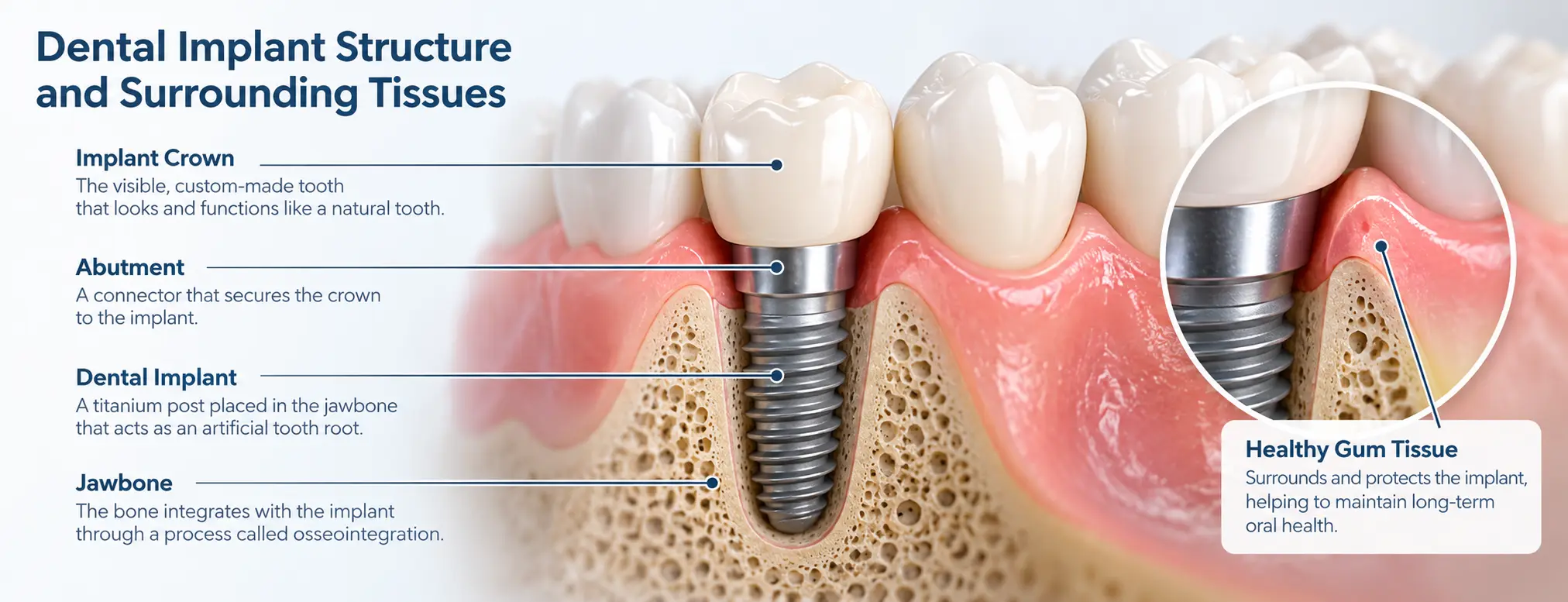
A dental implant is a small post placed in the jawbone to support a replacement tooth or other dental restoration. Successful treatment depends partly on osseointegration, the process through which the surrounding bone bonds with the implant surface.
Early implant failure occurs when the implant does not integrate adequately with the jawbone during healing. Late implant failure can develop after an implant has functioned for months or years, sometimes because of inflammation, bone loss, excessive forces, or other complications.
It is also important to distinguish implant failure from a problem with the restoration. For example, a crown may loosen because a connecting screw has become loose, even though the implant remains stable in the jawbone.
The American Academy of Periodontology’s guidance on peri-implant diseases explains how inflammation around implants can affect the surrounding tissues and, in more advanced cases, the supporting bone.
Understanding these differences helps patients recognize when professional assessment is appropriate without assuming the worst.
7 Warning Signs of Potential Dental Implant Problems
1. Persistent or Worsening Pain
Some discomfort is expected after implant placement, and recovery varies depending on the procedure and the individual. Pain that continues beyond the expected healing period, returns after improving, or becomes progressively worse deserves attention.
Several issues may contribute to implant-related pain, including inflammation, infection, pressure from the bite, or a problem with the restoration. Pain alone cannot confirm implant failure.
If discomfort persists or increases, contact your dentist and explain when it started, where it occurs, and whether chewing makes it worse. Do not assume that severe or prolonged pain is simply part of the healing process.
2. Movement of the Implant or Restoration
A feeling that an implant is moving requires prompt professional assessment. However, identifying exactly what is moving matters.
A dental implant is anchored in the jawbone, while the crown or bridge above it is attached through restorative components. A loose crown or connecting screw can create movement even when the implant itself remains integrated with the bone.
Movement of the implant itself may indicate a more serious problem with stability or bone integration. A dentist must distinguish between these possibilities through an appropriate examination.
Do not repeatedly wiggle the restoration, attempt to tighten a screw, or try to repair it at home. Doing so may damage the restoration or irritate the surrounding tissues.
3. Swelling or Redness Around the Implant
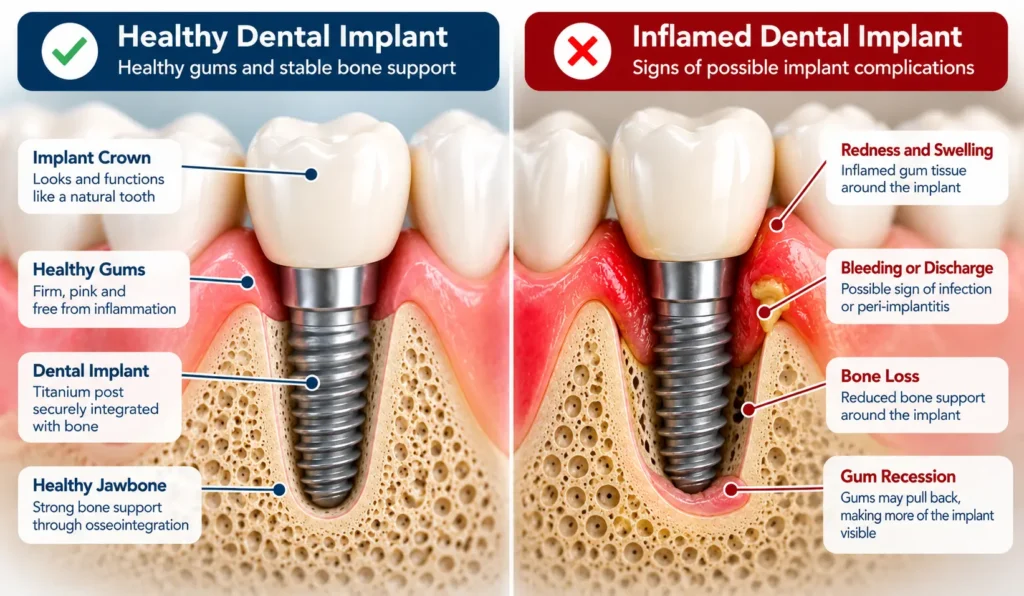
Red, tender, or swollen gums around an implant can indicate inflammation. If these changes persist, return after initial healing, or become more pronounced, arrange a dental evaluation.
One possible cause is peri-implant mucositis, an inflammatory condition affecting the soft tissue around an implant. If inflammation progresses and supporting bone begins to deteriorate, the condition may be classified as peri-implantitis.
These conditions are not interchangeable, and their severity cannot be determined reliably from appearance alone. Early assessment helps the dental team identify whether inflammation is present and what management may be appropriate.
Swelling that increases rapidly, particularly with fever or spreading facial swelling, requires urgent medical or dental attention.
4. Bleeding or Pus Around the Implant
Bleeding during brushing or flossing around an implant may be a sign of inflamed gum tissue. Persistent bleeding, tenderness, or discharge should be assessed rather than dismissed as ordinary irritation.
Pus around an implant can indicate infection or another significant inflammatory problem. You may also notice an unpleasant taste or odor, although these symptoms alone do not establish a diagnosis.
Peri-implant diseases can affect the tissues surrounding an implant and may damage supporting bone if they progress. The American Academy of Periodontology identifies bleeding and visible inflammation among the signs that warrant attention.
Continue gentle oral hygiene unless your dental professional advises otherwise, and contact your dentist for guidance. Do not attempt to drain the area or start leftover antibiotics without professional direction.
5. Gum Recession or Changes Around the Implant
Have the gums around your implant started looking different? You may notice that more of the restoration is visible, the gumline appears uneven, or the surrounding tissue seems to have changed shape.
Gum recession does not automatically mean an implant has failed. Changes may relate to the soft tissue, the original anatomy, healing, or other local conditions.
Nevertheless, changes in gum appearance can sometimes occur alongside inflammation or alterations in the bone supporting the implant. A professional examination can help determine whether the tissue is healthy and whether further assessment is needed.
Report new or progressive changes, especially when they occur alongside bleeding, tenderness, discharge, or discomfort.
6. Difficulty Chewing or a Change in Your Bite
An implant-supported crown should be evaluated if it suddenly feels too high, contacts the opposing teeth differently, or becomes uncomfortable when you chew.
These symptoms may result from bite alignment, a loose restorative component, damage to the crown, or other dental conditions. They do not necessarily indicate that the implant has failed.
However, excessive or uneven forces can place additional stress on the restoration and surrounding structures. Your dentist may need to examine how your teeth meet, assess the restoration, and determine whether an adjustment or another intervention is appropriate.
Avoid repeatedly testing the area by biting down hard. If chewing is uncomfortable, use professional guidance to determine how best to protect the restoration until your appointment.
7. A Damaged Crown or an Unusual Sensation
A chipped crown, visible crack, sudden looseness, or a new clicking sensation can indicate a problem with the implant-supported restoration.
The crown, connecting screw, abutment, and implant are separate components. Damage to one component does not automatically mean that the implant in the jawbone has failed.
Depending on the findings, the dentist may recommend repairing or replacing a component, adjusting the restoration, or investigating a more complex problem.
Do not glue a damaged crown back into place or attempt a home repair. Contact your dentist, describe the change, and follow instructions about eating and caring for the area until it can be examined.
What Causes Dental Implant Failure?
Dental implant complications can develop for several reasons. Sometimes multiple factors contribute, and a symptom alone rarely identifies the cause.
Potential contributing factors include:
- Inadequate bone integration: The implant may not bond sufficiently with the jawbone during healing.
- Inflammation or infection: Bacterial plaque and inflammation around the implant can affect the surrounding gum tissue and, in some cases, supporting bone.
- Insufficient bone support: The quantity or quality of the supporting bone can influence implant stability.
- Smoking or tobacco use: Tobacco use is a recognized risk factor for peri-implant disease and can affect healing.
- Medical conditions affecting healing: Certain health conditions, including poorly controlled diabetes, may influence healing and complication risk.
- Excessive bite forces: Uneven loading, teeth grinding, or other mechanical stresses may contribute to restorative or implant-related problems.
- Inadequate oral hygiene or maintenance: Plaque accumulation and missed maintenance visits can allow inflammation to develop or go undetected.
- Treatment-planning or restorative complications: Problems involving implant positioning, restoration design, or component integrity may require professional correction.
Risk varies between individuals. Having one of these factors does not mean an implant will fail, and complications do not automatically indicate that a patient did something wrong.
The American Academy of Periodontology’s patient guidance discusses several relevant risk factors, including smoking, diabetes, previous periodontal disease, and inadequate plaque control.
What Should You Do If You Suspect a Failed Dental Implant?
If you notice persistent discomfort, bleeding, swelling, discharge, or movement, take the following steps:
- Contact your dentist promptly. Explain the symptoms and request guidance on how soon you should be examined.
- Describe when the symptoms began. Mention whether they are improving, worsening, or returning after a period without problems.
- Avoid moving or testing the implant. Do not attempt to tighten, remove, or repair any component yourself.
- Follow instructions for eating and oral care. Your dentist can advise you on protecting the area until it is examined.
- Attend the recommended evaluation. An examination and any indicated imaging can help clarify the problem and guide treatment.
Seek urgent medical attention for severe or rapidly increasing swelling, especially when accompanied by fever or worsening symptoms. Difficulty breathing or swallowing is an emergency and requires immediate emergency medical care.
Do not self-prescribe antibiotics or assume that medication alone will resolve an implant-related problem. Treatment depends on the underlying cause.
How Does a Dentist Evaluate a Potentially Failing Implant?
A dental implant evaluation begins with your symptoms, medical and dental history, and the timing of the changes you have noticed.
The dentist may examine the surrounding gums, look for bleeding or discharge, inspect the crown and connecting components, and assess how your teeth meet when you bite. Implant stability may also be assessed using appropriate clinical methods.
Dental X-rays or other imaging may be recommended when needed to evaluate the surrounding bone, implant position, or other structures. The specific tests depend on your symptoms and examination findings.
The goal is to distinguish among different possibilities, such as soft-tissue inflammation, changes in bone support, a loose crown, or a mechanical problem.
This distinction matters because treatment for a damaged restoration may be very different from treatment for an implant that has lost stability. A clinical examination is necessary before a dentist can recommend an appropriate course of action.
Can a Failed Dental Implant Be Saved or Replaced?
Treatment depends on what has happened, how severe the problem is, and the condition of the surrounding tissues.
If the implant remains stable but the crown or another restorative component is damaged, the dentist may be able to repair or replace that component.
Inflammation around an implant may require professional cleaning, improved home-care techniques, or additional periodontal treatment, depending on its severity. More advanced peri-implant disease may require a different approach to manage the affected tissues.
If an implant has lost adequate stability or integration, removal may be necessary. Replacement may be considered later, but the timing and suitability depend on the bone, gum tissue, healing, and underlying cause.
There is no single treatment that works for every implant complication. A dentist must evaluate the specific situation before determining whether the implant can be retained, whether the restoration can be repaired, or whether another treatment is needed.
Patients considering treatment for missing or failing teeth can also review the clinic’s information on single-tooth dental implants and full-mouth dental implants. These pages explain treatment options, but suitability must be determined individually.
How Can You Reduce the Risk of Dental Implant Problems?
Although no maintenance routine can eliminate every complication, consistent care helps support long-term implant health.
- Brush twice daily and clean around the implant as recommended by your dental team.
- Use appropriate floss or interdental cleaning aids to remove plaque from areas that are difficult to reach.
- Attend routine dental examinations and recommended implant maintenance visits.
- Avoid smoking and seek professional support if you want to stop using tobacco.
- Follow your post-operative instructions during healing.
- Tell your dental team about relevant medical conditions and medications.
- Report persistent pain, bleeding, swelling, discharge, or changes in the restoration promptly.
Dental implants require ongoing care even after the initial healing period. Regular monitoring allows your dental professional to check the restoration and surrounding tissues and identify changes that may need attention.
Have Concerns About a Dental Implant in Weston, FL?
If you have noticed changes around a dental implant, an evaluation can help clarify what is happening and what steps may be appropriate.
At Weston Family Dental Center in Weston, Florida, patients can discuss implant-related concerns with the dental team and learn about appropriate evaluation and treatment options. The next step depends on your symptoms and clinical findings, not simply on how the area looks or feels.
Do not wait for a minor concern to become more uncomfortable before seeking advice. Contact the clinic to arrange an appointment if you are experiencing persistent symptoms or have questions about an existing implant.
Contact Weston Family Dental Center to discuss your dental implant concerns.
FAQs of Dental Implant Failure: 7 Warning Signs Weston Patients Should Know
Can a dental implant fail years after placement?
Yes. Complications can develop after an implant has functioned for years. Inflammation, loss of supporting bone, mechanical problems, and other factors may contribute. A dental examination is needed to identify the cause.
Does pain always mean a dental implant is failing?
No. Pain can have several causes, including bite problems, irritation, inflammation, or restorative complications. Persistent or worsening pain should be evaluated rather than treated as proof of implant failure.
Can a loose dental implant crown be repaired?
Sometimes. A loose crown may involve a connecting screw or another restorative component while the implant itself remains stable. A dentist must determine what is moving before recommending repair.
What does an infected dental implant look like?
Possible signs include red or swollen gums, tenderness, bleeding, and discharge. Some conditions may produce few noticeable symptoms. Appearance alone cannot confirm an infection, so professional assessment is necessary.
Can a failed dental implant be replaced?
Replacement may be possible in some cases, but it is not guaranteed. The dentist must assess the cause of failure, available bone support, the condition of the surrounding tissues, and the suitability of further treatment.
When should I contact a dentist about implant symptoms?
Contact your dentist promptly if pain persists or worsens, the gums bleed repeatedly, swelling develops, discharge appears, or the implant restoration becomes loose or damaged. Severe or rapidly increasing swelling requires urgent attention, and difficulty breathing or swallowing is an emergency.