Many families living in Weston, Florida, lead incredibly busy lives, balancing work, school, and extracurricular activities. With so much on your daily plate, it is easy to put oral health on the back burner, especially if your teeth feel completely fine. Many people assume that if a tooth doesn’t hurt, it must be completely healthy. Unfortunately, some of the most serious dental problems begin quietly and can progress for months—or even years—before causing pain. This is why understanding how dental problems without pain develop is essential for protecting your long-term smile. At Weston Family Dental Care, we see many patients who are surprised to learn they have significant oral health issues despite feeling perfectly healthy. Waiting for pain to arrive before booking a dental checkup is a high-risk strategy that can lead to complex, expensive treatments that could have been completely avoided with early intervention. In this comprehensive, patient-focused guide, we will unpack why oral diseases develop silently, how to spot hidden warning signs, and how proactive preventive dental care protects your health, comfort, and family budget.
Why Pain Is Not Always the First Sign of a Dental Problem
The human body uses pain as an alarm system. If you touch a hot stove, your nerves instantly tell your brain to pull away to prevent a burn. However, your teeth and gums are structured differently than your skin or muscles. The outer layers of your oral anatomy do not have pain receptors, which means that early-stage damage occurs completely in silence. Understanding this biological reality is the first step toward achieving a truly healthy smile and breaking the habit of waiting for discomfort before scheduling a visit.
How Teeth and Gums Respond to Disease
To understand why oral disease can progress silently, it helps to examine the anatomy of a tooth. A tooth is composed of three primary layers: enamel, dentin, and the inner pulp chamber. Enamel is the hard, highly mineralized outer surface that covers the visible crown of the tooth. It is actually the hardest substance in the human body, even stronger than bone structure. Because enamel contains no living nerves, blood vessels, or cellular pathways, it is completely incapable of feeling temperature, pressure, or irritation. When cavities without pain or painless tooth decay begin, they dissolve this outer enamel layer. You can have a cavity growing for months or even a year without feeling a single thing because the nerves deep inside the tooth are still completely insulated from the bacteria and bacterial acids.
[ Enamel ] –> Hard, outer shield (No nerves / No pain)
↓
[ Dentin ] –> Middle layer (Sensitive to temperature when exposed)
↓
[ Pulp ] –> Living center (Nerves / Sharp, throbbing pain)
Similarly, your gums and supporting bone structure are highly resilient but incredibly vulnerable to silent damage. When plaque buildup and tartar accumulation begin to irritate the delicate gum tissue, your body’s initial biological response is mild inflammation, medically known as gingivitis. This early gum disease causes swelling, redness, and increased vascularity as blood flow increases to fight off the bacteria, but it rarely causes actual pain. The tissues attempt to adapt to the bacterial presence rather than sending sharp distress signals, allowing the disease to advance deeper into the structural foundations of your smile without triggering your body’s primary pain alarms. This makes it easy for patients to ignore the initial changes.
Why Early Dental Damage Often Goes Unnoticed
Because you cannot feel changes in your enamel or early gum irritation, hidden dental problems go completely unnoticed during your daily hygiene routine. When you look in the bathroom mirror in the morning, you see a bright, white smile and assume everything is perfectly fine. However, microscopic bacteria are constantly at work in areas your toothbrush bristles and traditional floss simply cannot reach, such as between tight teeth or deep inside the microscopic grooves of your molars. They form a sticky, invisible film of plaque that eventually hardens into rock-like tartar accumulation. This hardened buildup is chemically bonded to the tooth surface and can only be safely removed by a registered hygienist during a professional dental examination and cleaning. Without regular dental checkups, these silent dental problems continue to expand, eating away at your tooth structure and the supporting bone beneath the surface without making a sound.
The Difference Between Symptoms and Disease Progression
It is vital for patients to understand that disease progression and painful symptoms do not happen at the same time in dentistry. In many medical conditions, a disease is already advanced by the time noticeable symptoms appear, and this is especially true in the oral cavity. Dental issues without pain are the rule, not the exception. By the time a tooth throbs late at night, wakes you up from sleep, or a painful gum abscess forms, the condition has already progressed from a minor, easily treatable issue into a major dental emergency. Disease progression happens quietly over many months of bacterial activity, while painful symptoms appear suddenly and violently once the structural damage finally breaks through the protective boundaries and reaches a live nerve or causes an acute infection in the jawbone. Relying on pain as an indicator of when to see a dentist is like waiting for your car’s engine to seize before getting an oil change.
Common Dental Problems That Often Start Without Pain
Several major dental issues develop completely under the radar. Understanding these common problems can help you appreciate why routine dental exams are so critical for every member of your family, regardless of how great your teeth feel right now.
Cavities in Their Early Stages
Tooth decay begins with a microscopic chemical process called demineralization. When you consume sugars, starches, and carbohydrates, the bacteria naturally present in your mouth feed on these particles and produce acid as a toxic byproduct. This acid attacks the enamel, stripping away vital minerals like calcium and phosphate. At this early stage, early decay often manifests as small, chalky white spots on the teeth. These white spots are the very first oral health warning signs of a cavity, yet they cause absolutely no discomfort, sensitivity, or structural change that you can feel.
If left untreated, the continuous acid exposure completely dissolves the enamel matrix, creating a physical hole—a cavity. As long as this cavity remains confined within the protective enamel layer, it remains a painless tooth decay process. It is only when the decay breaks through the enamel boundary and enters the softer, nerve-rich dentin layer underneath that you begin to experience tooth decay symptoms like sensitivity to hot, cold, or sweets, or a sharp ache. Catching a cavity during its silent phase means a simple, conservative composite filling can easily restore the tooth. Waiting until it hurts often means needing a root canal treatment or a full-coverage dental crown to prevent the tooth from splitting.
Gum Disease (Gingivitis and Early Periodontitis)
Gum disease is often referred to by periodontists as a silent killer of smiles because of its total lack of early painful warning signs. It starts with plaque buildup along and below the gumline. If this plaque is not thoroughly removed by daily brushing and meticulous flossing, it hardens into tartar, providing an ideal, porous breeding ground for destructive bacteria. This leads directly to gingivitis, the earliest stage of gum disease symptoms. While you might notice bleeding gums when you brush or floss, or a slight puffiness, you will rarely feel any physical discomfort or soreness.
If gingivitis is ignored, it can quickly progress into early periodontitis. At this stage, the bacterial infection begins to destroy the bone and ligaments that anchor your teeth into your jaw. The gums begin to pull away from the teeth, creating deep, infected pockets where more anaerobic bacteria hide and multiply. Remarkably, this bone loss progression occurs completely without pain. Many patients have no idea they are losing the structural support for their teeth until the teeth become loose, shift out of place, affect their bite, or require extraction and replacement with dental implants.
| Stage of Gum Disease | Common Invisible Developments | Visual Signs to Watch For |
|---|---|---|
| Gingivitis | Plaque buildup and tartar accumulation irritate the edges of the gums. | Minor redness, puffy edges, and light bleeding during brushing. |
| Early Periodontitis | Toxins destroy the bone and ligaments holding the teeth in place. | Gums slowly pull away from the teeth, creating deep pockets. |
| Advanced Periodontitis | Severe, irreversible bone loss occurs around the roots. | Teeth become loose or shift positions; roots become exposed. |
Cracked or Worn Teeth
Your teeth are subject to immense mechanical pressure every day from chewing, biting, and lifestyle habits like teeth grinding (bruxism) or clenching, which frequently worsen due to daily stress. Over time, this constant mechanical stress can cause microscopic hairline fractures or severe enamel wear. Cracked teeth often develop silently. A tiny fracture can exist in a tooth’s structure for a long time without causing any immediate symptoms or visible changes.
However, as you continue to chew food and bite down, the crack flexes under the pressure, gradually widening over time. This allows bacteria, microscopic food debris, and acidic fluids to seep deep into the inner layers of the tooth. Delayed symptoms mean you might only feel a sharp twinge of pain months later when the crack finally propagates into the pulp chamber or when a major piece of the tooth breaks off entirely during a meal, requiring an emergency dental restoration.
Dental Infections Developing Beneath the Surface
Some of the most dangerous dental infections develop deep beneath the surface of your smile, completely hidden from sight. If a tooth suffers minor trauma, an impact, or deep decay, the nerve inside can die slowly over time. When the nerve dies, it loses its blood supply and its ability to transmit pain signals to your brain. You might think the tooth is fine because a previous sensitivity stopped hurting, but the reality is that bacteria are multiplying rapidly inside the dead root tissues.
Eventually, these bacteria travel out of the microscopic opening at the bottom of the root tip and spill into the surrounding jawbone, leading to chronic abscess formation. A chronic dental infection can live in the bone for years, slowly destroying bone tissue without causing acute pain. It only becomes intensely painful when an acute flare-up occurs—often when your immune system is stressed—causing sudden facial swelling, severe throbbing pain, pus drainage, and a systemic health risk to your entire body.
Oral Cancer in Early Stages
Oral cancer is a serious, life-threatening condition that emphasizes why early detection benefits are so critical in modern dentistry. In its early stages, oral cancer is almost always completely silent and painless. It may appear as a small red or white sore, a tiny lump, an area of thickening, or an unusual patch of tissue in the mouth or on the tongue that doesn’t heal properly within two weeks.
Because these lesions do not hurt, patients frequently mistake them for a minor canker sore, an accidental cheek bite, or irritation from a rough food particle. Without a regular oral cancer screening during routine dental exams, these malignant changes can progress unnoticed into advanced stages, where treatment becomes significantly more complex, invasive, and life-altering. Catching it early during a routine visit changes everything.
Warning Signs You Should Never Ignore
Even though many dental problems start without pain, your mouth does drop subtle clues. Paying attention to these early signs of dental disease can save your smile. Here is a checklist of oral health warning signs you should never ignore:
Silent Oral Health Checklist
☐ Bleeding gums when brushing or flossing
☐ Persistent bad breath that mints won’t cure
☐ Brief flashes of tooth sensitivity to cold or sweet foods and drinks
☐ Gum recession (teeth looking longer than before)
☐ Slight loose feeling in any permanent tooth
☐ Unusual white, dark, or rough spots on teeth
☐ Subtle changes in how your teeth fit together
☐ Constant dry mouth or lack of healthy saliva
☐ Mild, occasional clicking or discomfort in the jaw
If you notice any of these signs, schedule a dental checkup as soon as possible. Early detection often means simpler, less invasive, and less expensive treatment.
To help you visualize how these conditions unfold, review the clinical comparison below:
| Dental Condition | Early Stage (Painless) | Late Stage (Painful/Advanced) |
|---|---|---|
| Tooth Decay | White spots, minor enamel softening, zero discomfort. | Severe throbbing, hot/cold sensitivity, deep cavities, toothache. |
| Gum Disease | Red, slightly puffy gums, bleeding during brushing. | Receding gums, loose teeth, painful chewing, pus, tooth loss. |
| Cracked Teeth | Microscopic hairline fracture, zero pain when chewing. | Sharp pain when releasing a bite, broken tooth structure, nerve exposure. |
| Root Infection | Nerve dies slowly, asymptomatic bone destruction at root tip. | Severe dental abscess, visible swelling, facial pain, fever. |
Why Routine Dental Exams Detect Problems Before Pain Begins
Because so many serious dental issues are invisible and completely painless to the average person, professional intervention is required to find them. Dentists use advanced diagnostic tools and specialized clinical training to see exactly what is happening beneath the surface of your smile, identifying concerns long before you ever feel them.
Professional Dental Examination
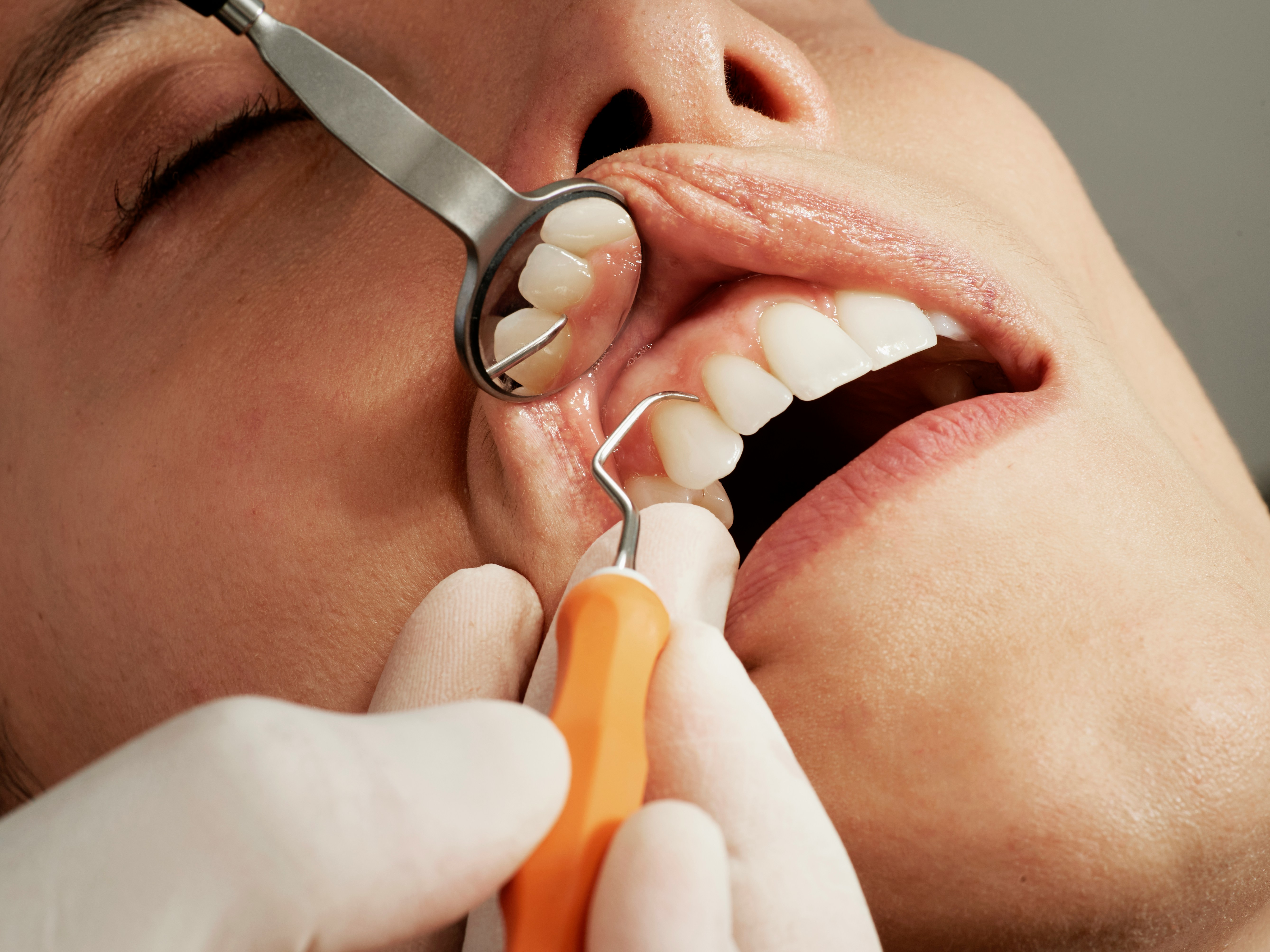
During a comprehensive dental examination at Weston Family Dental Care, our experienced clinical team checks every aspect of your oral health. We look at the structural integrity of your existing dental work, inspect every single tooth surface for early signs of dental disease, and evaluate how your teeth come together when you bite. We can identify weak or soft spots in your enamel that indicate demineralization before a true cavity even forms, allowing for non-invasive treatments to reverse the damage.
Digital X-Rays and Hidden Problems
Many hidden dental problems occur in places that the naked eye simply cannot see, such as between tight teeth or deep below the gumline. This is where dental x-rays become absolutely indispensable. Our modern digital radiography provides highly detailed, high-resolution images with minimal radiation exposure. These x-rays allow us to spot interproximal cavities (decay forming between teeth), early bone loss progression from gum disease, and silent dental infections at the root tips before they can cause severe pain or spread through your body.
Visual Exam Only =======> Misses up to 50% of early decay between teeth.
Visual + Digital X-Rays ===> Reveals the complete internal and external picture.
Oral Cancer Screening
As a routine part of every preventive dental care visit, we conduct a thorough, complimentary oral cancer screening. We visually inspect and physically feel your lips, tongue, cheeks, the floor of the mouth, and your throat for any signs of abnormal tissue changes or lumps. This quick, completely painless screening is one of the most vital components of your regular checkup, as early detection drastically improves treatment success and saves lives.
Periodontal Evaluation
We perform a meticulous periodontal evaluation by gently measuring the space between your teeth and gums using a specialized clinical tool. Healthy gum pockets measure between 1 and 3 millimeters. Pockets that measure 4 millimeters or deeper indicate early gum disease, bacterial accumulation, and tissue detachment. By tracking these measurements at every routine visit, we can halt gum disease in its tracks before it permanently destroys the underlying bone structure.
What Happens When You Wait Until Something Hurts?
Waiting until a tooth hurts to schedule an appointment is a reactive approach to oral health that can have significant financial and clinical consequences. When pain finally strikes, it means the disease has already caused substantial damage to the tooth’s anatomy or the surrounding tissues. Let’s look at what typically happens when you wait for symptoms:
| Stage | Symptoms | Typical Treatment |
| Stage 1: Incipient Decay | Painless | Simple, affordable filling |
| Stage 2: Deep Cavity | Mild twinges or occasional sensitivity | Large filling or inlay |
| Stage 3: Root Infection | Severe tooth pain | Root canal treatment and crown |
| Stage 4: Severe Abscess | Unbearable pain, swelling, or infection | Extraction and dental implant |
Key Takeaway: Delaying treatment allows dental problems to progress from minor, easily treated conditions to more serious issues requiring complex procedures, higher costs, and more time in the dental chair.
- Larger cavities and extensive decay: A small, painless cavity can be fixed quickly with a simple, affordable composite filling. If you wait until it causes an intense toothache, the decay has likely penetrated deep into the tooth, requiring an expensive porcelain crown to restore its strength.
- Root canal treatment: When decay or a crack reaches the inner pulp chamber, the live nerve becomes infected and inflamed. This results in severe, throbbing pain. To save the tooth from extraction, a more complex root canal treatment becomes necessary to clear the infection and seal the canals.
- Advanced gum disease and tooth loss: Ignoring bleeding gums because they do not hurt allows periodontitis to quietly destroy your jawbone support. Once the bone is gone, it cannot easily grow back. This leads to loose teeth that may eventually need to be extracted and replaced with dental implants or bridges.
- Higher treatment costs and complex procedures: Preventive care is incredibly cost-effective. A routine dental exam and cleaning are often fully covered by insurance or are highly affordable out of pocket. In contrast, emergency treatments, root canals, crowns, and oral surgeries carry much higher costs and require multiple, lengthy appointments.
For example, consider a patient who skips their regular dental checkups for two years because “nothing hurts.” During that time, a small interproximal cavity forms between two molars. Because it is a cavity without pain, the patient has no idea. By the time they call our office complaining of a severe toothache, the decay has destroyed half the tooth and infected the nerve. What could have been a quick, inexpensive filling has now turned into a multi-step process involving a root canal and a custom dental crown. Proactive care avoids these exact scenarios.
How to Protect Your Smile Before Problems Become Painful
Proactive care is the secret to a lifetime of healthy smiles. By incorporating these core preventive dentistry habits into your daily routine, you can stop dental issues without pain from turning into major emergencies:
- Brush twice daily: Use a soft-bristled toothbrush and fluoride toothpaste to remove plaque buildup from all surfaces of your teeth. Brush for at least two full minutes every morning and night.
- Floss daily: Brushing only cleans about 60% of your tooth surfaces. Flossing daily is the only way to remove food particles and plaque from between your teeth and beneath the gumline where cavities without pain frequently start.
- Receive professional cleanings: Even excellent brushers leave behind some plaque, which eventually hardens into tartar. Only a registered dental hygienist can safely scrape away tartar during your routine dental exams.
- Maintain a healthy diet: Limit your intake of sugary snacks, sodas, and acidic drinks. Opt instead for nutrient-dense foods like crunchy vegetables, lean proteins, and calcium-rich dairy products that naturally strengthen enamel.
- Avoid tobacco products: Smoking and chewing tobacco dry out your mouth, restrict blood flow to your gums, mask early signs of dental disease like bleeding, and dramatically increase your risk of advanced gum disease and oral cancer.
- Stay hydrated: Drink plenty of water throughout the day, especially tap water containing fluoride. Water helps wash away food debris, neutralizes destructive acids, and maintains healthy saliva production.
When Should You Schedule a Dental Checkup?
For the vast majority of children and adults, the standard clinical recommendation is to schedule routine dental exams and professional cleanings every six months. This twice-a-year frequency is carefully timed because it allows your dental team to catch and reverse early decay and gingivitis before they can transition into permanent, painful structural damage. It is an investment in your wellness that forms the core of high-quality family dentistry.
However, certain high-risk patients may require more frequent visits—such as every three or four months. This includes individuals who are pregnant, have a history of advanced gum disease, suffer from chronic health conditions like diabetes, or have compromised immune systems. Additionally, if you experience any immediate oral health warning signs like bleeding gums, a loose tooth, or a chipped edge, you should never wait for your six-month visit—schedule an evaluation right away.
Conclusion
The absence of pain does not mean the absence of disease. Many of the most common and destructive oral health issues—from cavities and gum disease to deep root infections—begin as silent dental problems that cause zero discomfort in their early stages. Taking a proactive approach to your oral health through regular preventive dentistry is the smartest decision you can make for your smile, your systemic health, and your budget. Catching problems early means simpler, less invasive, and much less expensive care.
Don’t wait for a toothache to tell you something is wrong. Protect your long-term wellness and keep your smile bright. Contact Weston Family Dental Care today to book a comprehensive dental exam and cleaning for you and your family. Our welcoming team in Weston, Florida, is ready to help you maintain optimal oral health in a comfortable, stress-free environment.