Introduction
If you’ve been told you need a bone graft before dental implants, you may be wondering whether dental implants are still the right option for you. It’s a common concern, especially for patients who have been missing a tooth for months or even years. The good news is that bone loss doesn’t automatically prevent you from restoring your smile. In many cases, a dental bone graft can rebuild the support needed for a strong, long-lasting dental implant.
At Weston Family Dental Center, we often meet patients from Weston, Davie, Cooper City, Pembroke Pines, and surrounding South Florida communities who believe they’ve waited too long for treatment. After a comprehensive implant evaluation and advanced 3D CBCT scan, many discover they are still excellent candidates for dental implants with the right treatment plan.
In this guide, you’ll learn why jawbone loss happens, when a bone graft is recommended, how the procedure works, and what to expect before moving forward with dental implants. Our goal is to help you understand your options so you can make an informed decision about restoring your smile with confidence.
Why Does Jawbone Loss Happen After Tooth Loss?
When you lose a tooth, you lose more than just the visible crown. The tooth’s root also plays an important role by stimulating the jawbone every time you bite and chew. Once that stimulation is gone, the body begins to break down and absorb the unused bone through a natural process called bone resorption.
Bone loss starts soon after tooth extraction or tooth loss and continues gradually if the missing tooth isn’t replaced. Over time, the jawbone may lose the height and width needed to securely support a dental implant.
While missing teeth are the most common cause, other factors can also contribute to jawbone loss, including:
- Advanced gum disease (periodontitis)
- Dental trauma or facial injuries
- Tooth infections that damage the surrounding bone
- Delaying tooth replacement for months or years
The amount of bone loss varies from person to person, which is why every patient should have a comprehensive implant evaluation before treatment is planned.
Why Is Healthy Jawbone Important for Dental Implants?
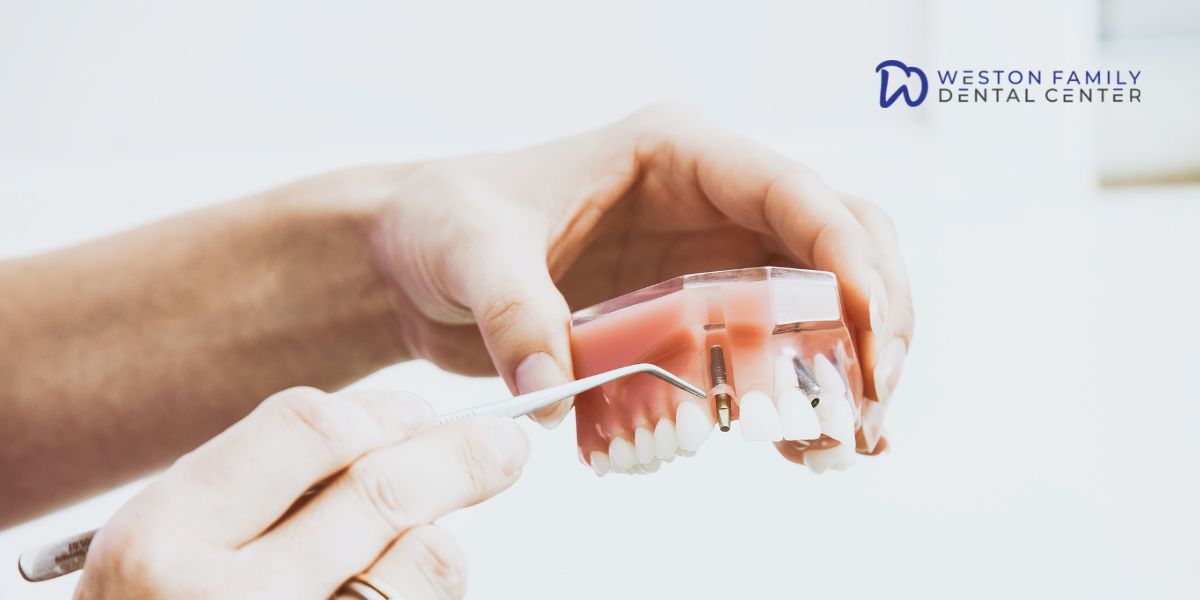
A dental implant is designed to replace the root of a missing tooth. After placement, it gradually fuses with your jawbone through a natural healing process called osseointegration. This fusion creates the stable foundation needed to support your replacement tooth.
If there isn’t enough healthy bone, the implant may not achieve the stability required for predictable long-term success.
A healthy jawbone helps:
- Support the implant securely
- Improve chewing efficiency
- Maintain normal speech
- Preserve your facial structure
- Increase the longevity of your dental implant
At Weston Family Dental Center, we evaluate jawbone height, width, and density using advanced 3D CBCT imaging before recommending implant treatment. This allows us to determine whether your existing bone is sufficient or whether additional bone support would improve the outcome.
What Is a Bone Graft Before Dental Implants?
A bone graft before dental implants is a procedure that rebuilds areas of the jaw where bone has been lost. Rather than replacing your natural bone, the graft acts as a framework that encourages your body to generate new bone during healing.
As the area heals, your natural bone gradually integrates with the grafting material, creating a stronger foundation for future implant placement.
Depending on your clinical needs, your dentist may recommend different types of grafting materials, including:
- Your own bone (autograft)
- Donor bone (allograft)
- Bovine bone (xenograft)
- Synthetic bone substitute (alloplast)
The appropriate option depends on the amount of bone loss, the implant location, and your overall oral health.
Most patients undergo the procedure comfortably under local anaesthesia, and mild soreness or swelling typically resolves within a few days.
How Do You Know If You Need a Bone Graft?
Not every patient needs a bone graft before dental implants.
Many people can proceed directly to implant placement if they still have enough healthy jawbone to support the implant. Others may benefit from bone grafting to improve implant stability and long-term success.
A bone graft is commonly recommended if you:
- Have been missing a tooth for a long period
- Have experienced bone loss from periodontal disease
- Lost bone following dental trauma
- Have naturally thin jawbone in the implant area
- Need additional bone support before implant placement
The only reliable way to determine this is through a clinical examination combined with a 3D CBCT scan. These images allow your dentist to accurately measure available bone and recommend the most appropriate treatment plan.
At Weston Family Dental Center, treatment recommendations are based on your individual clinical findings—not every patient automatically requires bone grafting.
How Does Weston Family Dental Center Evaluate Your Jawbone?
Successful implant treatment begins with careful diagnosis.
During your consultation, our team reviews your dental history, examines your gums and remaining teeth, and discusses your smile goals before creating a personalized treatment plan.
One of the most valuable diagnostic tools we use is 3D Cone Beam Computed Tomography (CBCT). Unlike traditional dental X-rays, CBCT imaging provides a detailed three-dimensional view of your jaw, allowing us to evaluate:
- Bone height and width
- Bone density
- The location of nearby nerves and sinuses
- Overall implant placement conditions
This technology helps us determine whether your jawbone can support a dental implant immediately or whether bone grafting would provide a stronger long-term foundation.
Our goal is always to recommend the most conservative treatment that delivers predictable, lasting results.
What Are the Benefits of Getting a Bone Graft Before Dental Implants?
When a bone graft is clinically recommended, it helps create the conditions needed for successful implant treatment rather than adding an unnecessary procedure.
Potential benefits include:
- Improved implant stability
- Better long-term support for the replacement tooth
- More natural gum and facial appearance
- Improved chewing function after treatment
- Better preservation of jawbone structure
By rebuilding lost bone before implant placement, your dentist can create a stronger foundation that supports both the function and appearance of your final restoration.
At Weston Family Dental Center, bone grafting is recommended only when it contributes to a safer, more predictable outcome for your dental implants.
Restore Your Smile with Confidence
Being told you need a bone graft before dental implants doesn’t mean you’ve lost the opportunity to replace your missing tooth. In many cases, bone grafting is simply the first step toward creating a strong, healthy foundation for a successful dental implant.
The best way to determine whether you need a bone graft is through a comprehensive implant consultation and advanced 3D CBCT evaluation. At Weston Family Dental Center, we take the time to assess your jawbone, explain your treatment options clearly, and recommend only the procedures that support your long-term oral health. Whether you need bone grafting or can proceed directly with dental implants, you’ll receive a personalised treatment plan designed around your individual needs.
If you’re considering dental implants in Weston, FL, or you’ve been told you may need a bone graft before dental implants, our experienced team is here to help.
Schedule your consultation with Weston Family Dental Center today to find out if you’re a candidate for dental implants and take the first step toward restoring a healthy, confident smile.
FAQs : Bone Graft Before Dental Implants: Do You Really Need One?
Can I get dental implants without a bone graft?
Yes, many patients can receive dental implants without a bone graft if they have enough healthy jawbone to support the implant. A 3D CBCT scan helps determine whether your jawbone provides the stability needed for successful implant placement.
How do I know if I need a bone graft before dental implants?
The only way to know is through a comprehensive dental examination and 3D CBCT scan. Your dentist will evaluate your jawbone’s height, width, and density to determine whether a bone graft before dental implants is necessary.
How long does a bone graft take to heal before dental implants?
Healing time typically ranges from 3 to 6 months, depending on the amount of bone grafting required and your body’s natural healing process. Your dentist will confirm that the graft has healed properly before placing the dental implant.
Is getting a bone graft before dental implants painful?
Bone grafting is usually performed under local anaesthesia, so you shouldn’t feel pain during the procedure. Most patients experience only mild swelling or soreness for a few days, which can usually be managed with medication and proper aftercare.
What happens if I don’t have enough jawbone for dental implants?
If you don’t have enough jawbone, you may still be a candidate for dental implants. In many cases, a bone graft can rebuild the lost bone, creating the support needed for a stable and long-lasting implant.