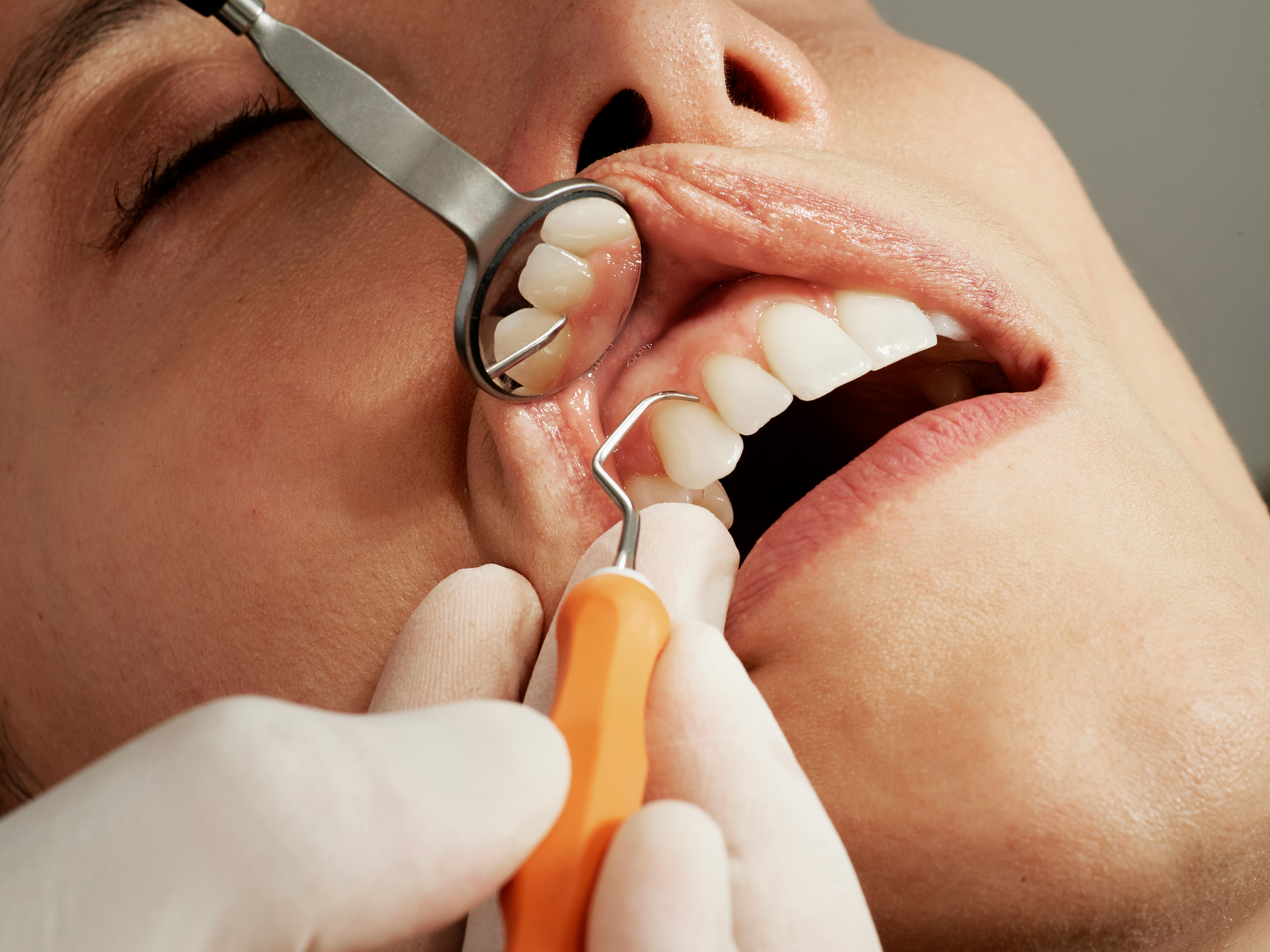
Losing two or more neighboring teeth often raises a practical question: does every missing tooth require its own separate dental implant? For many patients exploring multiple tooth replacement in Weston, FL, the answer is not always a single implant per tooth. Depending on your oral health and jawbone structure, an implant-supported bridge in Weston FL may offer an effective way to restore a multi-tooth gap.
An implant-supported dental bridge replaces several missing teeth in a row using dental implant posts for support rather than relying entirely on your remaining natural teeth. Because every mouth has unique structural and health needs, determining whether this fixed tooth replacement fits your situation starts with an individualized clinical evaluation and careful treatment planning.
What Is an Implant-Supported Dental Bridge?
An implant-supported dental bridge is a connected dental restoration designed to fill a space where multiple adjacent teeth are missing. Instead of attaching to healthy neighboring teeth, the prosthetic teeth are anchored to small titanium or ceramic dental implant posts placed directly into the jawbone.
To understand how it works, it helps to compare it with a traditional tooth-supported bridge. In a conventional bridge, a dentist reshapes the natural teeth on either side of the gap so they can hold dental crowns that suspend the replacement teeth between them. With a fixed dental bridge supported by implants, the implant posts act as artificial tooth roots beneath the gums, carrying the load of the connected restoration.
Importantly, choosing an implant-supported restoration does not mean you need one implant for every missing tooth. For example, two strategically placed implants can sometimes support a three-tooth or four-tooth bridge, depending on the location in the mouth and the strength of the surrounding bone. Your dentist determines the exact design based on your anatomy and functional needs.
7 Potential Benefits of Implant-Supported Bridges
When evaluating options for dental implants for multiple missing teeth, patients often compare removable appliances, single implants, and implant bridges. Below are seven potential advantages of an implant-supported bridge.
1. Replaces Multiple Missing Teeth
When three or four neighboring teeth are missing, placing an individual implant and crown for every single space is not always necessary or anatomically practical. An implant-supported bridge spans the entire gap as one unified restoration. By using strategically positioned implants to support multiple connected prosthetic teeth, your dentist can restore a wider section of your smile efficiently.
2. Does Not Rely Entirely on Adjacent Natural Teeth
Traditional bridges require altering the enamel of adjacent natural teeth so they can serve as anchors. Over time, those supporting teeth bear extra biting forces and can become vulnerable to decay or structural wear. Because an implant-supported bridge derives its support from dental implant posts in the jaw, it avoids placing that structural burden on neighboring teeth. While adjacent teeth are still evaluated during restorative dentistry planning to ensure healthy spacing and gum contours, they do not have to be ground down solely to hold the bridge.
3. Provides a Fixed Tooth Replacement Option
Unlike a removable partial denture that uses clasps and must be taken out for daily soaking and cleaning, a dental bridge supported by implants is fixed in place. Once secured by your dentist, it remains stable while you speak, smile, and eat. Keep in mind that “fixed” does not mean maintenance-free; daily home hygiene and routine professional dental visits remain essential to keep the surrounding gums and implants healthy.
4. Helps Restore Chewing Function
Gaps from missing teeth often force patients to chew on only one side of the mouth or avoid firmer foods altogether. Because implant posts integrate with the jawbone, an implant-supported restoration provides a stable foundation for biting and chewing. Many patients find that replacing missing back or side teeth helps them return to a more varied, comfortable diet, though exact chewing feel and strength vary from person to person.
5. Can Be Designed for a Natural-Looking Appearance
Modern restorative dentistry allows dental laboratories to craft bridges from durable ceramics and porcelains that closely mimic natural tooth enamel. During treatment planning, your dentist evaluates tooth shape, shade, bite alignment, and how the bridge meets the gumline so the restoration blends harmoniously with your surrounding smile. While biological factors like gum thickness and healing patterns influence the final look, careful customization helps achieve a balanced, natural appearance.
6. May Help Maintain Bone in Areas Supported by Implants
When natural teeth are lost, the jawbone in that area no longer receives regular stimulation from chewing forces, which can lead to gradual bone resorption over time. According to the American Academy of Periodontology, dental implants transmit functional forces into the surrounding bone, helping preserve bone volume in the implant-supported sites. While an implant cannot prevent all age-related or biological changes across the entire jaw, it provides meaningful jawbone support where the posts are placed.
7. Can Be Planned Around the Patient’s Specific Needs
No two smiles lose teeth in the exact same way. An implant-supported bridge gives your dental team flexibility to tailor the restoration around your unique anatomy. Your dentist assesses the exact span of missing teeth, available bone density, gum health, opposing bite forces, and long-term maintenance goals to design a restoration suited specifically to you.
Implant-Supported Bridge vs Traditional Dental Bridge
Patients comparing tooth replacement choices frequently ask how an implant bridge vs traditional bridge stacks up in everyday care and placement. The table below highlights the primary structural differences:
| Consideration | Implant-Supported Bridge | Traditional Dental Bridge |
|---|---|---|
| Support | Dental implants placed in the jaw | Supporting adjacent natural teeth |
| Placement | Requires minor implant placement surgery | Does not require implant surgery |
| Adjacent teeth | Does not rely on them as bridge supports | Usually requires reshaping adjacent teeth for crowns |
| Bone involvement | Implants are placed directly in the jawbone | Rests above the gums without replacing tooth roots |
| Treatment process | Includes implant assessment, placement, and healing | Involves preparing supporting teeth and placing the bridge |
Neither approach is universally superior for every patient. A traditional bridge may be a practical choice when neighboring teeth already need dental crowns or when a patient prefers to avoid surgery. Conversely, an implant-supported bridge may be favored when neighboring teeth are healthy and untouched, or when long-term bone support is a priority. You can explore more details in our guide on dental implants vs traditional bridges.
Who May Be a Candidate for an Implant-Supported Bridge?
Determining whether you are a candidate for an implant-supported bridge involves looking at several clinical factors rather than checking off a simple list. During an evaluation in Weston, a dentist typically reviews:
- Pattern of tooth loss: Having two or more missing teeth next to each other in an area suited for bridge support.
- Jawbone volume and density: Having adequate bone to stabilize the implant posts, or being a candidate for preparatory procedures such as bone grafting before dental implants.
- Gum health: Having healthy periodontal tissues or successfully managing any existing gum inflammation before implant placement.
- Overall medical history: Reviewing systemic health conditions, medications, and habits like tobacco use that can affect healing.
- Bite dynamics: Evaluating how your upper and lower teeth meet so excessive grinding or clenching forces do not overload the bridge.
- Commitment to oral hygiene: Being willing and able to clean carefully around the restoration and attend regular dental checkups.
A comprehensive oral examination and 3D diagnostic imaging are necessary to evaluate these factors safely. To learn more about how dentists evaluate overall implant suitability, read our overview of dental implant candidacy.
What Is the Implant-Supported Bridge Process?
Understanding the implant-supported bridge procedure helps patients plan ahead with realistic expectations. While the exact sequence and healing timeline vary based on individual anatomy and whether preparatory care is needed, treatment generally follows six stages:
- Consultation and oral health assessment: Your dentist examines your teeth, gums, and bite, discusses your goals, and reviews your health history.
- Imaging and treatment planning: Digital X-rays or 3D cone-beam scans map bone volume, nerve pathways, and sinus locations to plan precise implant placement.
- Implant placement, if recommended: If you move forward, the dental implant posts are placed into the jawbone under local anesthesia or appropriate comfort options.
- Healing and integration with the jawbone: Over a healing period, the bone gradually bonds to the implant surfaces in a process called osseointegration. Temporary tooth replacement options may be discussed during this phase.
- Bridge design and placement: Once the implants are stable, impressions or digital scans are taken so a dental lab can fabricate your custom bridge, which is then secured to the implants and adjusted for bite alignment.
- Follow-up and maintenance: Routine visits allow your dentist to check the stability of the bridge, the health of the surrounding gum tissue, and your bite comfort.
Note that this process applies to replacing a localized section of missing teeth, which differs in scope from full-mouth reconstruction. For comparison, you can read about the dental implant treatment process used when replacing an entire upper or lower arch of teeth.
How Many Implants Are Needed for a Dental Bridge?
Patients often wonder about the exact math behind an implant bridge, such as whether three missing teeth require two implants or three. In restorative dentistry, there is no universal implant-to-tooth ratio that applies to everyone.
Instead, your dentist determines the number of implants based on:
- The total number of missing teeth in the span
- Whether the missing teeth are in the front of the mouth or the back molar region, where chewing forces are higher
- The quality, height, and width of the underlying jawbone
- The strength and habits of your bite, including nighttime clenching
- The specific materials and design of the prosthetic bridge
For a deeper look at how dentists calculate implant support for different gaps, see our article on how many implants are needed for multiple missing teeth.
How Do You Maintain an Implant-Supported Bridge?
Even though ceramic prosthetic teeth cannot develop cavities, the gums and bone supporting your implants remain vulnerable to plaque buildup and inflammation. Consistent daily care helps protect your investment and oral health:
- Brush twice daily: Use a soft-bristled toothbrush and non-abrasive toothpaste to clean the surfaces of the bridge and along the gumline.
- Clean beneath the bridge: Because the replacement teeth are connected, standard floss cannot pass straight down between them. Your dentist or hygienist will recommend specific tools—such as floss threaders, super floss, interdental brushes, or a water flosser—tailored to your bridge design.
- Attend routine dental examinations: Regular cleanings and checkups allow your dental team to clean around the implants safely and monitor bone levels with periodic X-rays.
- Watch for early changes: Contact your dentist promptly if you notice persistent bleeding, gum swelling, discomfort when biting, or any sensation that the bridge feels loose. Recognizing signs of potential implant complications early helps protect surrounding tissues.
Considering an Implant-Supported Bridge in Weston, FL?
If you are living with multiple missing teeth and want to explore whether an implant-supported bridge is right for you, a personalized consultation is the clearest place to start. At Weston Family Dental Center, our team takes time to evaluate your oral health, review diagnostic imaging, and explain all suitable tooth-replacement options clearly so you can make an informed decision without pressure.
To learn more about our restorative services, visit our dental implants service page or schedule an appointment with our Weston dental office today.
FAQs: Implant-Supported Bridge in Weston FL
Can one dental implant support more than one replacement tooth?
In select situations, such as replacing two small lower front teeth where biting forces are lighter, a dentist might evaluate a single implant supporting a small cantilever restoration. However, for most multi-tooth gaps—especially in the back of the mouth—dentists typically recommend at least two implants to distribute chewing forces safely.
Is an implant-supported bridge removable?
In standard daily use, no. An implant-supported bridge is a fixed restoration secured to the implants with dental screws or cement, meaning you brush and clean it in your mouth. Only a dentist can remove a screw-retained bridge if maintenance or repair is ever required.
How is an implant-supported bridge different from All-on-4?
An implant-supported bridge typically replaces a specific section of two to four neighboring missing teeth while preserving your remaining healthy natural teeth. All-on-4 is a full-arch restoration designed to replace an entire upper or lower row of teeth using four or more implants when all teeth in that arch are missing or failing.
Can an implant-supported bridge replace three missing teeth?
Yes, replacing three neighboring missing teeth with a three-unit bridge supported by two implants is a common restorative approach. Whether it is appropriate for you depends on the location of the gap, your bone density, and your bite forces.
Is an implant-supported bridge better than individual implants?
Neither option is automatically better. Individual implants allow you to floss between each tooth normally, whereas an implant-supported bridge may reduce the total number of surgeries and implants needed when bone space is limited or several adjacent teeth are missing. Your dentist can help weigh the pros and cons for your specific anatomy.
How long can an implant-supported bridge last?
With diligent home hygiene, regular professional care, and healthy bone support, dental implant posts can remain stable for many years, while the bridge restoration itself may eventually require maintenance or replacement due to normal wear. Because individual health, bite habits, and care routines vary widely, no specific lifespan can be guaranteed. You can learn more about factors influencing durability in our guide on dental implant longevity.
Can I get an implant-supported bridge if I have bone loss?
Having some degree of bone loss does not automatically rule out an implant-supported bridge. Depending on where the bone loss has occurred, your dentist may be able to place implants in areas with stronger bone or discuss bone grafting procedures to rebuild support prior to implant placement. According to the National Institute of Dental and Craniofacial Research, thorough diagnostic planning is essential to determine whether bone augmentation or alternative restorations are appropriate.