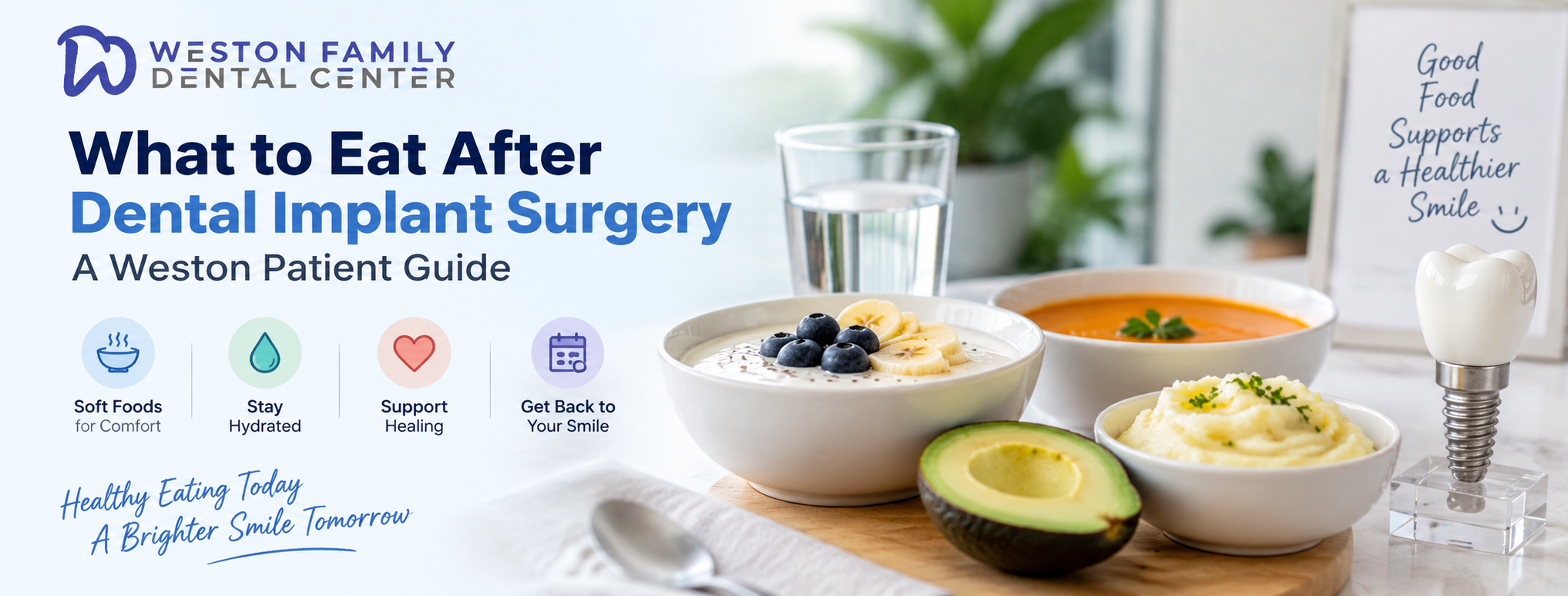
What should you eat after getting a dental implant?
It is one of the first questions many patients ask once they start thinking about recovery. If you are wondering what to eat after dental implant surgery Weston FL patients commonly need to adjust their meals for a short period while the mouth heals.
The good news is that you do not need a complicated diet. The main goal is to choose foods that are comfortable, easy to eat, and suitable for your stage of healing.
Your dentist may give you different instructions depending on your treatment. Those instructions should always come first.
Why Your Diet Matters After Dental Implant Surgery
Eating is part of everyday life, but it can feel different after implant treatment.
The surgical area may be tender. Swelling can also make chewing less comfortable. Hard foods may put unnecessary pressure on the area, while very hot or spicy foods may feel irritating.
Choosing softer foods gives you practical options while your mouth settles.
Nutrition matters too. Your body needs adequate protein, fluids, and a balanced intake of nutrients during recovery.
You do not need to look for special foods that promise faster implant healing. Instead, focus on eating enough, drinking enough water, and following the instructions from your dental team.
What to Eat in the First 24 Hours
The first day is usually the time to keep things simple.
Your dentist may recommend soft foods that require little chewing. Foods that are cool or at a comfortable temperature can also be easier to manage.
Good options may include:
- Yogurt
- Applesauce
- Smooth smoothies without seeds
- Mashed potatoes
- Mashed vegetables
- Soft pudding
- Smooth soups
- Broth that is not hot
If you prepare a smoothie, avoid ingredients with small seeds or pieces that could become uncomfortable around the treatment area.
Hydration is important too. Keep water nearby and drink regularly unless your healthcare provider has given you different instructions.
General oral surgery guidance also recommends soft foods and avoiding very hot food during the early period after surgery.
Foods to Eat During Days 2 and 3
By days two and three, many patients can start adding more filling soft foods.
Your dental implant recovery diet can include foods such as:
- Scrambled eggs
- Oatmeal
- Soft pasta
- Mashed potatoes
- Soft fish
- Cottage cheese
- Well cooked vegetables
- Soft rice
- Tender cooked grains
Scrambled eggs are an easy option because they provide protein without requiring much chewing.
Soft fish can also work well when prepared without a hard crust or spicy seasoning.
If your dentist tells you to chew on the opposite side, follow that instruction. There is no benefit in testing the treatment area with foods that require extra pressure.
What to Eat During the First Week
The first week is usually about gradual progress.
Some patients can introduce more texture as tenderness decreases. Others may need to stay with softer foods for longer.
Your diet can depend on the type of treatment, number of implants, implant location, healing, and whether you have a temporary restoration.
For example, you might move from mashed potatoes and eggs toward soft pasta, tender fish, cooked vegetables, and other foods that require gentle chewing.
There is no need to rush.
If your treatment involves additional procedures, your dentist may give you different dietary instructions. You can learn more about what to expect during the full arch implant process when planning for more extensive treatment.
You can also review dental implant recovery tips for additional guidance.
What Foods Should You Avoid After Dental Implant Surgery?
Knowing what not to eat after dental implants can make recovery easier.
Hard and Crunchy Foods
Avoid foods that require heavy chewing during the early recovery period.
Examples include nuts, hard chips, popcorn, hard candies, and very crunchy vegetables.
Sticky or Chewy Foods
Sticky foods can require prolonged chewing.
Caramel, chewing gum, and similar foods may be best avoided until your dentist says they are appropriate.
Very Hot Foods and Drinks
Very hot foods and drinks can feel uncomfortable after oral surgery.
Allow them to cool before eating or drinking. Your dentist may provide specific instructions based on your treatment.
Spicy or Irritating Foods
Spicy foods can irritate sensitive tissues.
If something causes burning or discomfort, choose a milder option while the area heals.
Foods With Small Particles or Seeds
Small seeds and particles can be difficult to manage around a healing surgical site.
Ask your dentist when these foods can be safely added back to your diet.
Alcohol and Tobacco
Your dentist may recommend avoiding alcohol and tobacco during recovery.
Follow the instructions given specifically for your treatment.
When Can You Return to Your Normal Diet?
There is no single day when every dental implant patient should return to normal food.
Some patients progress sooner. Others need more time.
Your dentist may look at the treatment area and your healing before recommending a broader diet.
If chewing feels uncomfortable, do not force it.
Cambridge University Hospitals also advises patients receiving dental implants to keep the surgical area clean and follow their dental team’s postoperative guidance.
How to Make Eating Easier During Recovery
A little preparation can make the first few days much easier.
Prepare food before treatment. Keep yogurt, eggs, oatmeal, applesauce, cottage cheese, soft pasta, and other suitable foods available.
Choose smaller meals. Smaller portions may feel easier when your mouth is tender.
Stay hydrated. Keep water nearby throughout the day.
Avoid unnecessary chewing. Follow any instructions about which side of your mouth to use.
Choose nutritious foods. Soft food can still provide protein and other important nutrients.
Follow your dental instructions. Your dentist knows the details of your procedure and should guide your recovery.
If you are considering full mouth dental implant treatment, your treatment plan may include dietary instructions specific to your procedure.
Nutrition Tips for Supporting Recovery
You do not need a special recovery food.
You need a balanced diet that you can comfortably eat.
Protein can come from eggs, yogurt, cottage cheese, soft fish, and other suitable foods.
Fruits and vegetables can be prepared in softer forms. Applesauce, mashed vegetables, cooked vegetables, and smooth foods can make it easier to maintain variety.
Water should also remain part of your daily routine.
The purpose of a temporary diet is comfort and protection while your mouth heals. No particular food can guarantee faster healing or implant success.
What If Eating Causes Pain or Something Feels Wrong?
Some tenderness can be expected after treatment, but unexpected symptoms should not be ignored.
Contact your dental office if you notice increasing pain, persistent or worsening swelling, bleeding that does not settle as instructed, signs that concern you about infection, or a problem with a temporary restoration.
Do not try to diagnose the problem yourself.
Your dental team can examine the area and determine whether you need further care.
Weston patients who have questions about their recovery can contact the dental team or schedule a follow up appointment.
Final Thoughts
Eating after implant treatment does not have to be complicated.
The key is to progress gradually and choose foods that feel comfortable for your current stage of healing.
If you are wondering what to eat after dental implant surgery Weston FL patients should remember that there is no universal meal plan. Your treatment and your dentist’s instructions should guide your choices.
If you are preparing for dental implant treatment in Weston, FL, talk with Weston Family Dental about what to expect before and after your procedure. Our team can provide personalized instructions for eating, oral hygiene, and recovery based on your treatment plan.
Frequently Asked Questions About Eating After Dental Implants
Can I eat immediately after dental implant surgery?
Your dentist will tell you when to eat after your procedure. When eating is permitted, soft foods that are cool or at a suitable temperature may be recommended. Follow your specific instructions.
Can I drink coffee after implant surgery?
Coffee may be restricted immediately after treatment, particularly if it is very hot. Ask your dentist when coffee is appropriate and follow their instructions.
Can I eat eggs after dental implant surgery?
Eggs are often a practical soft food because scrambled eggs require little chewing. However, your individual instructions should determine when you introduce them.
When can I eat solid foods?
There is no universal timeline. Some patients gradually return to more solid foods as comfort improves, while others may need a longer temporary diet. Your dentist should provide the final guidance.
Can I drink through a straw?
Ask your dental team before using a straw. Depending on your procedure, you may be advised to avoid suction during the early recovery period.
What should I do if food gets near the implant area?
Do not poke or disturb the surgical site. Follow the oral hygiene and rinsing instructions provided by your dentist. If you are concerned, contact your dental office.