Introduction
Most patients don’t think twice about a dental checkup — until the hygienist hands them a lead apron. That moment triggers the question almost every parent and new patient silently asks: Is this actually safe?
It’s a fair concern. But here’s what most people don’t know: digital dental X-rays in Weston represent a dramatic leap forward from the film-based imaging most of us associate with childhood dentist anxiety. The radiation reduction alone — up to 90% less than traditional X-rays — changes the conversation entirely.
This guide breaks down exactly how digital X-rays work, why they’re safer, and what Weston patients and families should know before their next appointment.
What Are Digital Dental X-Rays?
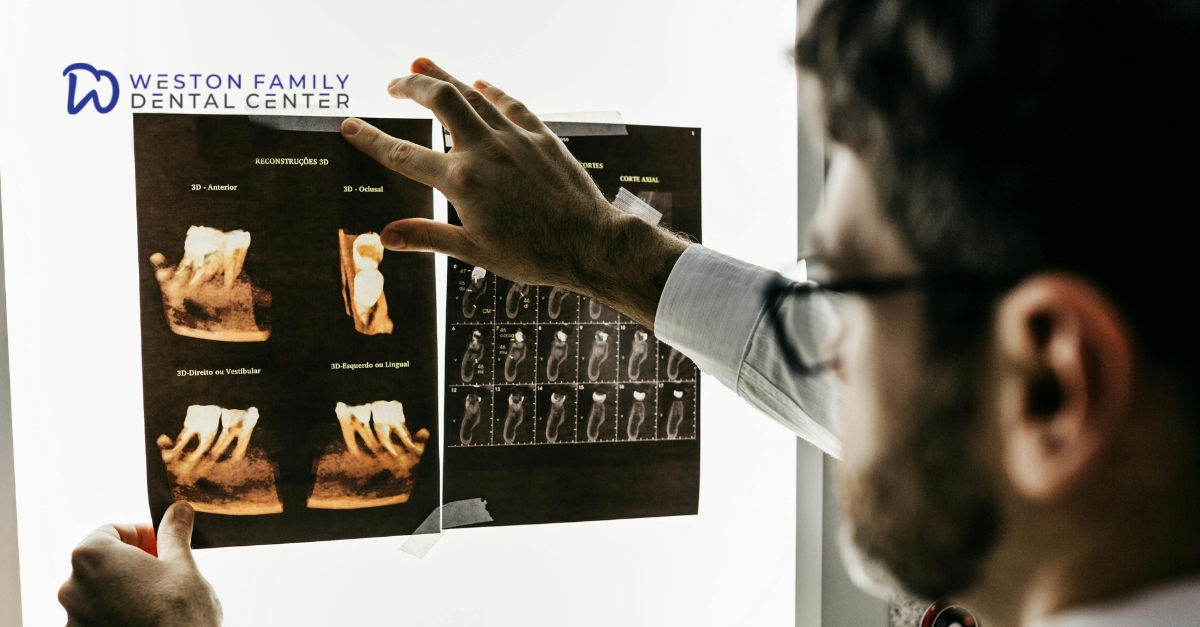
Digital dental X-rays use electronic sensors — not film — to capture detailed images of your teeth, gums, and jawbone. Instead of waiting on a darkroom-processed image, the result appears on a screen within seconds.
The sensor captures data from a small burst of radiation, converts it into a high-resolution digital image, and transfers it directly to your dentist’s diagnostic system. No chemicals. No film. No unnecessary delay.
This is the foundation of modern dental technology in Weston — and it fundamentally changes both the diagnostic experience and the safety profile of routine imaging.
Traditional vs. Digital X-Rays — Key Differences
Understanding the gap between old and new helps patients make informed decisions before they sit in the chair.
Radiation Exposure Comparison
This is the number that matters most. Traditional film X-rays required a significantly higher radiation dose to properly expose the film. Digital sensors are far more efficient — they require up to 80–90% less radiation to produce a sharper, clearer image.
To put it in perspective: a complete set of digital dental X-rays exposes you to roughly the same radiation as a two-hour commercial flight. The risk is genuinely minimal.
Image Quality and Accuracy
Digital images are sharper and more detailed. Dentists can zoom in, adjust contrast, and measure specific areas with a precision that film simply cannot match. This translates to better diagnoses, earlier detection, and more accurate treatment planning — all from the same appointment.
Speed and Convenience
There is no processing time with digital imaging. The image is available immediately, which means less chair time and faster answers. For anxious patients — especially children — that speed matters more than most clinics acknowledge.
Environmental Impact
Film X-rays required chemical developers and fixers, which are hazardous to dispose of responsibly. Digital X-rays eliminate all of that. No chemicals, no film waste, no environmental footprint.
Are Dental X-Rays Safe for Patients?
This is the core question most patients want answered, and the answer is clearly yes — with important context.
Are dental X-rays safe? According to both the American Dental Association (ADA) and the U.S. Food and Drug Administration (FDA), dental X-rays are safe when performed according to established clinical guidelines. The radiation involved is extremely low — particularly with digital systems.
To put the numbers in perspective:
- A chest X-ray delivers approximately 0.1 mSv of radiation
- A digital dental bitewing X-ray delivers roughly 0.005 mSv
- The average person receives approximately 3 mSv per year from natural background radiation — sunlight, soil, food
A single digital dental X-ray exposes you to less radiation than eating a banana. The risk is not mathematically zero, but it is negligible against the diagnostic value it provides — and against the risk of not detecting a problem early, which is exactly why preventive dentistry in Weston plays a critical role in long-term oral health.
How Digital X-Rays Reduce Radiation Risk
The safety advantage of low radiation X-rays comes from several compounding technological improvements working together:
- More sensitive sensors — Digital sensors respond to radiation faster and require less exposure to produce a diagnostic-quality image
- Focused beam technology — The X-ray beam is precisely targeted, minimizing scatter radiation to surrounding tissue
- Shorter exposure duration — Because the sensor is so efficient, actual exposure time is a fraction of what film required
- Rectangular collimation — Modern digital units restrict the beam to exactly the area being imaged, further limiting unnecessary exposure
These aren’t incremental improvements. Cumulatively, they make dental imaging safety a non-issue for the vast majority of patients — including pregnant women and children, when clinical judgment confirms imaging is necessary.
Are Digital X-Rays Safe for Children and Families?
Parents ask this more than any other question. If you’re visiting a family dentist in Weston, Florida, this directly affects every member of your household — especially when it comes to pediatric dentistry in Weston and your child’s long-term oral health.
Here is what families need to know:
Digital X-rays are safe for children when used appropriately. A few key protections are standard at every qualified practice:
- Lead aprons and thyroid collars are used for every patient regardless of age — shielding the most radiation-sensitive areas of the body
- X-ray frequency is calibrated to the individual child’s oral health status — a low-risk child may only need imaging every 1–2 years
- The ADA recommends digital X-rays over film specifically because of reduced exposure, making them the clinical standard for pediatric patients
The bottom line for families: routine digital X-rays at your dental checkup in Weston, FL carry minimal risk and provide critical diagnostic information that protects your child’s oral health long-term.
When Do You Actually Need Dental X-Rays?
Not every appointment requires imaging. Here is when X-rays are clinically necessary:
- Routine checkups — New patients typically receive a full diagnostic set. Existing patients are re-imaged based on their individual risk profile, often every 1–2 years
- Detecting hidden issues — Cavities between teeth, early-stage bone loss, infections, and impacted teeth are completely invisible to the naked eye. X-rays catch them before they become complex
- Pre-procedure planning — Implants, root canals, extractions, and orthodontic work all require precise imaging for safe, effective outcomes
- Monitoring existing conditions — Patients with active gum disease or existing restorations may need more frequent imaging to track changes over time
The clinical goal is never to X-ray unnecessarily. The goal is to catch problems early — when treatment is simpler, less invasive, and significantly less expensive.
Catch dental issues early with digital dental X-rays in Weston safer, faster, and designed for accurate diagnosis before problems become costly. Schedule your visit with Weston Family Dental Center or book your dental checkup in Weston today.
Why Weston Patients Choose Digital X-Rays
Patient preferences have shifted. More Weston residents are specifically asking about imaging technology when evaluating a new dental provider — and digital consistently comes out ahead. Here is why:
- Faster diagnosis — Immediate results mean answers in the same appointment, not a follow-up call
- Better treatment planning — High-resolution images give dentists more precise data to work from
- More comfortable experience — Smaller, thinner sensors are noticeably more comfortable than bulky film holders
- Safer for repeated visits — Especially for patients requiring ongoing monitoring, reduced radiation accumulation matters
- Environmentally responsible — No chemical waste, no film disposal
For anyone prioritizing preventive dentistry in Weston, digital imaging is simply the smarter standard — not an upgrade, but a baseline expectation.
Digital X-Rays as Part of Modern Dental Technology in Weston
At Weston Family Dental Center, digital X-rays don’t exist in isolation. They are part of a fully integrated diagnostic system. Images are stored directly in your patient file, accessible for comparison at every future visit. This longitudinal record is invaluable for tracking changes in bone density, cavity progression, or tooth alignment over time.
Modern dental technology in Weston also means seamless communication between dentists, specialists, and insurance providers. Digital images transfer instantly — eliminating the delays and quality degradation that came with physical films.
This is what safe dental diagnostics looks like in a fully 21st-century practice.
Common Myths About Dental X-Rays
“X-Rays Are Dangerous”
The danger associated with radiation applies to high-dose, whole-body exposure — not the micro-doses used in dental imaging. The radiation exposure from dental X-rays is so low it registers as background noise against your annual natural exposure. Declining routine imaging based on radiation fear means leaving problems to compound silently.
“You Don’t Need Them If You Feel Fine”
Dental disease is mostly painless until it is serious. Cavities between teeth, early-stage gum disease, and bone loss do not announce themselves with discomfort. By the time there is pain, the required treatment is typically more complex — and more expensive. Preventive imaging exists precisely because feeling fine is not a reliable diagnostic tool.
“Radiation Builds Up Quickly”
This is one of the most persistent myths in dental practice. The radiation from a single bitewing X-ray is essentially unmeasurable on the scale of cumulative lifetime exposure. Patients who receive X-rays annually for 30 years accumulate a fraction of what a single medical CT scan delivers. Digital vs. traditional X-rays is not a safety debate — both are clinically safe. Digital is simply better in every measurable category.
What to Expect During a Digital X-Ray Appointment
For patients who have never experienced digital imaging, the process is simple and quick:
- Sensor placement — A small sensor is positioned in the mouth using a comfortable holder. It is noticeably less bulky than traditional film
- Exposure — The machine emits a brief, focused burst of low-dose radiation lasting less than a second
- Instant image — The image appears on the dentist’s monitor within seconds of capture
- Real-time review — Your dentist walks you through the findings immediately, in the same appointment
A standard set of digital X-rays typically takes 5–10 minutes total. No recovery period. No side effects. No waiting.
Why Choose Weston Family Dental Center for Safe Imaging
Choosing where to get your dental X-rays in Weston is not just about convenience. It is about trusting the technology, the experienced dental team in Weston, and the clinical protocols behind every image taken.
At Weston Family Dental Center:
- Advanced digital X-ray systems are used exclusively — no outdated film-based equipment in the building
- Every X-ray decision follows ADA and FDA clinical guidelines — frequency and scope are driven by clinical need, not routine billing
- Lead aprons and thyroid shielding are standard for every patient, including children
- Your complete imaging history is stored digitally — making your longitudinal dental record accurate and always accessible
- The team explains every step — because informed patients make better decisions for themselves and their families
This is what a genuinely patient-first approach to safe dental diagnostics looks like.
Final Thoughts: Are Digital X-Rays Worth It?
The question is not really whether digital dental X-rays are safe. The clinical evidence — from the ADA, the FDA, and decades of daily practice — is conclusive. They are.
The more honest question is whether skipping them is safe.
Undetected cavities become root canals. Undetected bone loss becomes tooth loss. Undetected infections become systemic problems. Routine imaging is the single most effective tool in preventive dentistry in Weston — and digital technology has made that tool faster, safer, and more diagnostically accurate than at any point in the history of dentistry. If radiation anxiety has been keeping you or your family from a full dental workup, this is your reassurance: digital dental X-rays in Weston are about as routine — and as low-risk — as dental care gets.
Schedule your visit with Weston Family Dental Center and experience the benefits of digital dental X-rays in Weston — safer imaging, faster diagnosis, and more accurate treatment planning from day one. Call us on +1 954-385-9240 today or book your dental checkup in Weston.